

























































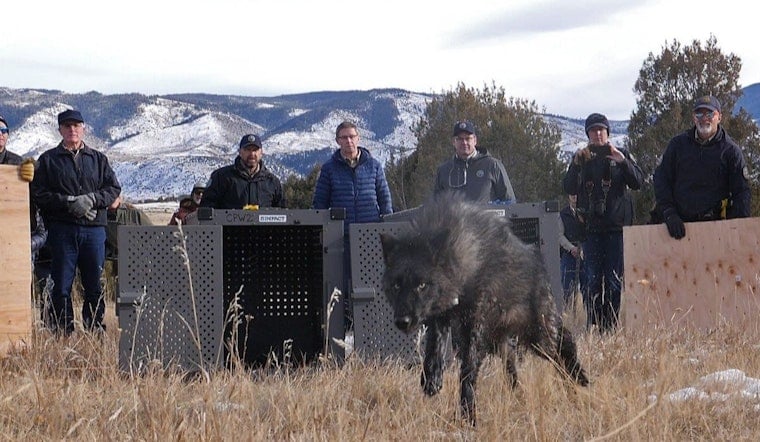
Colorado wildlife officers have shot and killed a gray wolf in Routt County after tying the animal to a string of attacks that left roughly 22 sheep dead across northwest Colorado. The move capped a months-long effort to track and deter the predator and has reignited a familiar fight between ranchers, state wildlife managers and federal regulators.
State Links Wolf To 22 Sheep Deaths
Officials with Colorado Parks and Wildlife said they removed the uncollared wolf after investigators connected it to a series of livestock losses, including the most recent sheep deaths in Routt County. According to The Denver Post, the attacks stretched back into 2025. CPW did not release the wolf’s identifying number, and agency spokespeople said a fuller account will appear in a final report on the department’s website.
Timeline And Evidence
CPW’s depredation log lists multiple confirmed attacks in northwest Colorado, including a Jan. 24 entry from Rio Blanco County that documents 11 sheep killed, along with other confirmed events from 2025. Those records, combined with field evidence gathered by investigators, formed the basis for authorizing lethal removal, according to Colorado Parks and Wildlife.
Ranchers Leaned Hard On Nonlethal Tools
Producers in the affected counties ramped up nonlethal defenses as the wolf kept testing their fences and their patience. They hired range riders, deployed livestock-guardian dogs, strung fladry, set up scare devices, and brought in extra herders while CPW teams conducted site assessments. The state and partner groups also handed out hazing gear and contracted additional range riders to boost human presence on the open range, an approach that CPW and local outlets say sits at the center of the agency’s conflict-minimization strategy, per Vail Daily.
Big Payouts And Federal Eyeballs
The killing comes as Colorado has paid out more than $1.3 million in wolf-related depredation claims since reintroduction began and approved over $706,000 in claims for 2025 alone, figures that have strained the state compensation fund and drawn attention at the Capitol, according to Colorado Politics. At the same time, the U.S. Fish and Wildlife Service has opened a formal review of how Colorado is using the federal 10(j) rule, taking public comment on the state’s wolf program, The Colorado Sun reported.
How Colorado Signs Off On Killing A Wolf
Under CPW rules and the federal 10(j) framework, lethal take is allowed only after investigators confirm repeated depredation, document the use of nonlethal tools, weigh the likelihood of continued losses, and rule out attractants. The agency posts its legal standard and final removal reports on a chronic-depredation page that lays out the four-factor test the wildlife commission uses to decide whether a wolf can be killed, according to guidance from Colorado Parks and Wildlife.
What Happens Next
Colorado Parks and Wildlife says it will release a final report on the Routt County removal and continue monitoring wolves on the Western Slope while working with livestock producers to head off future conflicts. Those decisions, along with the federal review, will help determine whether wolf translocations resume, how conflict-mitigation efforts are funded, and what rules will govern lethal responses going forward. CPW spokespeople told The Denver Post that more details will be posted on the agency’s website once the report is published.





