

























































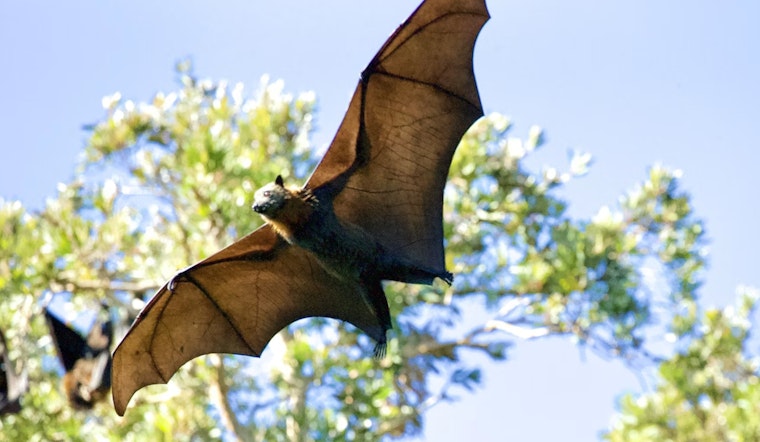
As dusk settles across the Sacramento region, the sky over bridges and wetlands starts to move. Long, twisting ribbons of bats pour out from concrete seams and levee cracks, turning the evening commute into a nightly wildlife show that doubles as free pest control for nearby farms.
Mary Jean "Corky" Quirk, the veteran bat rehabilitator who founded NorCal Bats and handles wetlands education for the Yolo Basin Foundation, says the Yolo Causeway alone holds roughly a quarter-million Mexican free-tailed bats, with nearly 200,000 more roosting at the Franklin Boulevard bridge. Together, those colonies push the regional count toward half a million animals, according to PBS KVIE. Quirk is one of the few people in California permitted to rehabilitate and exhibit bats. She emphasizes that roosting colonies generally have very low rabies rates but is blunt about one rule: never handle a grounded bat.
Where to watch the flyouts
The Yolo Basin Foundation runs Bat Talk & Tours from late June through September, leading car caravans out to the levee for up-close views of the causeway flyout, according to the Yolo Basin Foundation. Local naturalists and regional coverage describe the evening emergence from the causeway, reported as roughly a quarter-million bats, as one of the Sacramento area's can-not-miss summer spectacles.
Why they matter to farms
These flyouts are not just for show. Mexican free-tailed bats and other valley species are voracious insect hunters, feeding on moths, midges and a variety of crop pests. Economists have pegged the value of bat-driven pest control in North America at about $3.7 billion a year, according to Science, and regional work has documented their role in cutting down agricultural pests in the Sacramento Valley (California Agriculture).
City action and conservation concerns
At the same time, attempts to fix "bat problems" in town have stirred controversy. The city has installed exclusion barriers at downtown structures to keep bats out, most recently at the Tower Bridge parking garage in October 2025, within the legally allowed seasonal window. Even so, dead and orphaned bats soon started turning up, and the contractor later opened part of the barrier to try to address the problem, PBS KVIE reports. Transportation agencies now stress that any exclusion work needs careful planning and replacement roosts. The Caltrans bat mitigation guide lays out best practices and the regulations meant to protect colonies while keeping infrastructure usable.
If you find a grounded bat or think a roost might be in danger, experts say the safest move is to back away and call for help. Do not touch the animal. Instead, contact trained rescuers and report colonies to the California Department of Fish and Wildlife, which maintains a "Report a Bat Colony" portal and public guidance on bat issues (California Department of Fish and Wildlife). Local groups such as NorCal Bats and the Yolo Basin Foundation coordinate rescue, rehabilitation and tour programs that keep both the bats and their human neighbors a little safer.





