

























































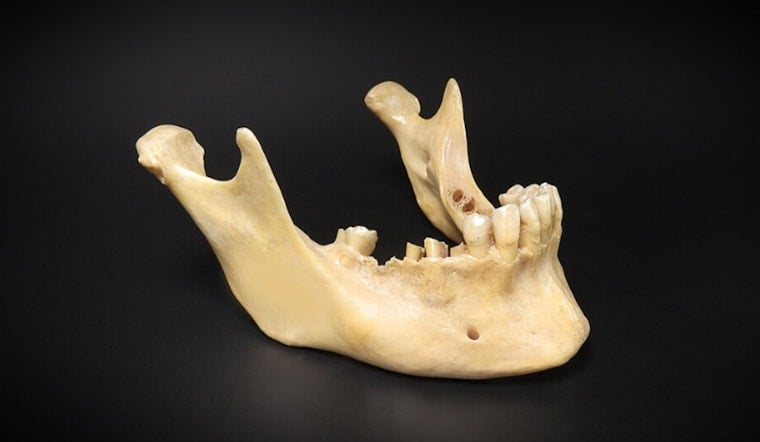
A casual Saturday outing at Linda Lane Beach in San Clemente took a grisly turn when beachgoer Katherine Kinnison says she uncovered what appeared to be the bottom half of a human jawbone, complete with four teeth, buried in the sand. She alerted nearby lifeguards, who contacted the Orange County Sheriff's Department. Deputies collected the fragment and sent it to the county coroner for testing, and authorities have not yet released any identification or cause of death.
Kinnison later described the discovery to the New York Post, noting that along this same stretch of sand she had previously stumbled across seal bones and pieces of fish vertebrae, according to the New York Post. Sgt. Lizbeth Gwisdalla told the outlet that deputies do not currently consider the find suspicious or malicious. She said the skull fragment is now with the coroner's office, which is coordinating with the California Native American Heritage Commission.
Coroner review and tribal consultation
The county coroner is tasked with determining whether the jawbone fragment is recent or of archaeological origin and whether it should be treated as evidence in a case. That decision will shape what happens next. If the coroner concludes the remains are Native American, state procedures require that the California Native American Heritage Commission be notified. The commission then designates a most likely descendant who can review the discovery and advise on appropriate handling, according to the California Native American Heritage Commission. The commission notes that designated descendants are generally given 48 hours to inspect the site once they are granted access.
Local history and cultural sensitivity
San Clemente is located within the ancestral homelands of the Juaneño, also known as the Acjachemen people, whose descendants retain ties to many coastal locations across Orange County. The Juaneño Band of Mission Indians, Acjachemen Nation emphasizes that coastal village areas and ceremonial sites are culturally important, and that their representatives are consulted when ancestral remains or artifacts are uncovered, according to the Juaneño Band of Mission Indians, Acjachemen Nation.
What to do if you find bones on the beach
Officials stress that if you encounter bones or anything that might be human remains, you should not touch, move, or collect the material. Instead, contact the nearest lifeguard or call 911. The City of San Clemente provides lifeguard contact information for beach incidents, and state law prohibits disturbing remains until the coroner has examined them so that potential evidence is preserved and possible burial sites are protected, according to the Native American Heritage Commission and state guidance.
The coroner's office will complete testing on the jawbone fragment before releasing any findings about identification or cause of death, and authorities say updates will be shared once results are available. For now, the bone remains in the custody of the coroner while investigators follow the established procedures.





.jpg)