

























































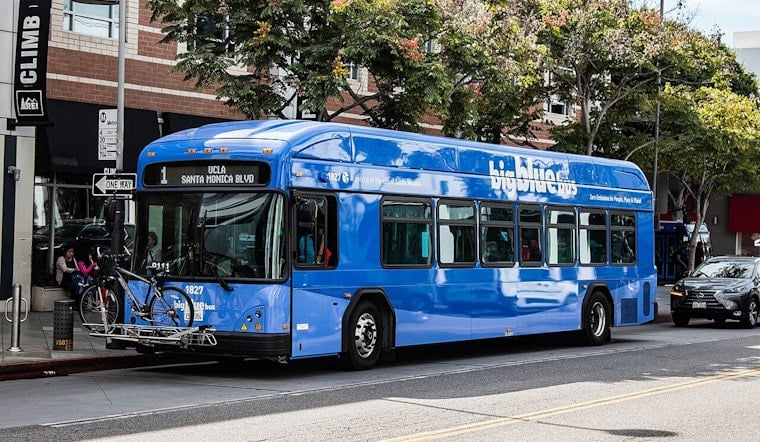
What started as a rough sketch at a community meeting, with talk of disc-shaped canopies, phone-readable stop IDs, and slimmer individual seats, has slowly turned into the blue-steel reality Santa Monica riders see on the curb today. The Big Blue Bus shelter program has inched forward over more than a decade, while the question of how much riders should pay has kept coming up in public meetings. Now the city has both: sleek new shelters and a fare hike riders can feel in their mobile wallets.
From Sketches To "Blue Spots"
Lorcan O’Herlihy Architects (LOHA) turned the bus stop into a modular kit, with rectangular bases and flying-saucer-style canopies over individual seats that can be scaled up for busy stops or trimmed down for quieter corners. The concept folded in integrated lighting, solar cells, and phone-readable IDs so riders can check real-time arrivals, as documented in Architectural Record.
Community Concerns From Early Meetings
At a January 21, 2010 meeting at the Montana Branch Library, residents were not shy about their doubts. They questioned whether the new signs would be legible, if the lighting would be bright enough and whether those disc-shaped canopies would actually keep anyone dry in a real rainstorm. Big Blue Bus staff, for their part, also warned of a looming operating shortfall and floated a fare restructuring proposal that included raising the one-way cash fare from 75 cents and increasing senior fares, while asking the public for feedback, according to the Santa Monica Mirror.
Fare Changes Took Years To Arrive
After multiple rounds of public hearings and budget debates, the agency finally moved ahead with a fare package that took effect August 10, 2025. Contactless single-ride fares rose to $1.25, up from $1.10, and cash fares increased to $1.50. Senior and disabled fares were also adjusted, the agency reported. Big Blue Bus framed the increases as necessary to support service improvements and keep buses running reliably, according to the City of Santa Monica.
Where Fares Fit Into Bigger Plans
The fare changes landed while the agency is also chasing a much bigger to-do list, including full fleet electrification, tweaks to routes and frequencies and a broader “Brighter Blue” overhaul. Local coverage has linked those ambitions to the need for steadier operating revenue. One report detailed a $53.3 million state grant backing electrification and service upgrades, and another tracked the agency’s Brighter Blue public input process, both tying those efforts to the system’s revenue needs.
What Riders Need To Know
For riders trying to sort out what all this means for their wallets, the full fare tables and pass options are posted online and available in person at Blue: The Transit Store (1444 4th St.). The agency notes that contactless TAP and mobile payments generally offer the best deal for regular riders. For the latest fares and where to buy passes, check the fare information page from Big Blue Bus, which lists current prices and purchase locations.





_Route_1_GILLIG_Low_Floor_EV_40%27_Santa_Monica_Blvd_@_4th_St._(48942543638).jpg)