

























































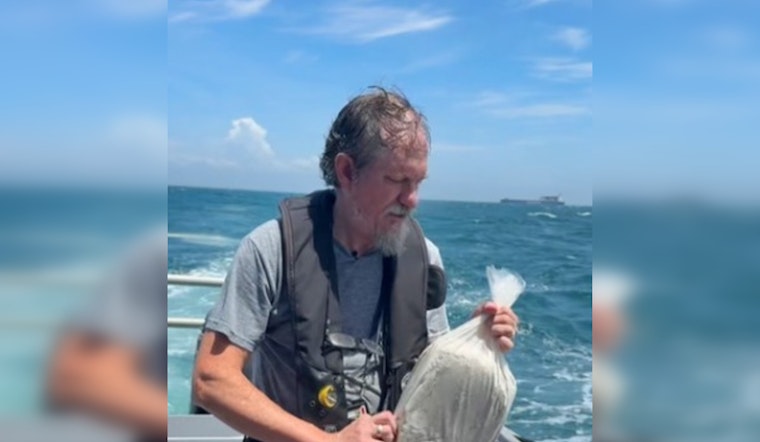
Off the North Carolina coast this week, a state crew carried out a quiet, annual ritual at sea, scattering the cremated remains of 116 unclaimed people into the Atlantic. A newly posted video shows workers loading sealed bags labeled as cremains onto a state vessel, heading into open water and releasing the packages one by one. The Division of Marine Fisheries says the yearly service is meant to give a dignified final resting place to people who die without family or anyone to claim them.
As reported by The Charlotte Observer, the Division of Marine Fisheries shared the video on June 4 with the caption, "Every year, Marine Patrol partners with the Medical Examiner’s Office to ensure unclaimed people are laid to rest with dignity." The outlet noted that in just a few days, the clip had drawn tens of thousands of views and hundreds of reactions.
Video Captures 116 Final Goodbyes
In the footage, staff load 116 bags onto a small state vessel, which is escorted offshore by Marine Patrol. Out at sea, workers scatter the cremains individually, releasing each package over open water. The scene plays out as a subdued, methodical process, with the focus on preparation and release rather than any public or religious ceremony.
What North Carolina Rules Require
State administrative rules require the chief medical examiner to keep custody of an unclaimed body for 10 days while officials try to locate relatives. If no one steps forward, the body can be cremated, and the ashes must then be held for three years before they can be disposed of. As outlined on Justia, after three years any unclaimed cremated remains "shall be disposed of in an appropriate manner."
Who Carries Out the Ceremony
The Division of Marine Fisheries, part of the state Department of Environmental Quality, handles the annual scattering through its Marine Patrol unit, working with the Office of the Chief Medical Examiner. The agency describes its role in caring for coastal waters and shares updates, including the burial at sea post and video, on its site and social channels: N.C. DEQ Division of Marine Fisheries.
Why Some Remains Go Unclaimed
State officials estimate that roughly 120 bodies go unclaimed in North Carolina each year, a figure reported by The Charlotte Observer. Circumstances can include homelessness, family estrangement, or deaths that occur far from any known relatives. When next of kin cannot be reached, the statutory process for cremation, storage, and eventual disposal begins.
Public Reaction to a Stark Tradition
The agency’s post drew a mix of gratitude, unease, and hard questions in the comments. Some users described the outing as a "beautiful last ride," applauding the effort to provide a respectful farewell. Others were less sure about the optics of scattering unaccompanied remains, even in a controlled setting. Burial at sea is a long-established practice recognized by authorities, and officials say this documented, tightly managed ceremony is meant to restore a measure of dignity to people who died without anyone to claim them.
How Families Can Find Out
Relatives who suspect a loved one may be among the unclaimed are urged to contact the Office of the Chief Medical Examiner or their county medical examiner. According to Justia, state rules allow family members to claim ashes at any point during the three-year retention period. The Division of Marine Fisheries and local coroners can help with next steps and paperwork for those seeking information or trying to make a claim.
The scattering seen in the video is likely to keep sparking debate over how states handle the remains of some of their most vulnerable residents. For now, officials say the practice follows North Carolina law and is intended to offer a final act of care. The post and full video remain available on the Division of Marine Fisheries’ public channels for anyone who wants to watch the sequence and read the agency’s statements in context.





