

























































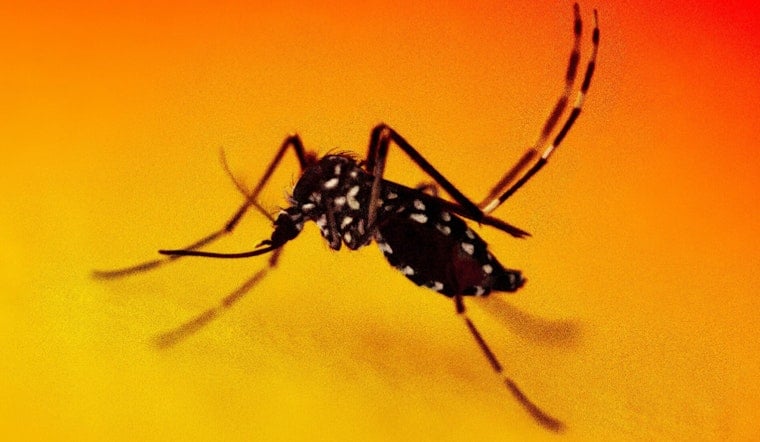
It might sound like the setup to a summer horror flick, but the goal here is fewer itchy ankles, not more. Silver Spring business Bee Safe Mosquito Control is rolling out roughly 600,000 Wolbachia-infected male 'ZAP' mosquitoes across the D.C. region this summer. Releases began in early June and are scheduled to continue through September, targeting the Asian tiger mosquito, a daytime biter known to spread dengue, Zika and yellow fever.
As reported by WTOP, owner Todd Montgomery said, “We're releasing 600,000 in total within the DMV for 2026,” and added that he hopes to expand the program next season. According to WTOP, the service runs about $1,000 per property, and Bee Safe has already sold out for the season. Montgomery also told the station his company is the first in the DMV to offer a Wolbachia-release service.
How the 'ZAP' method works
'ZAP' Males are lab-reared Aedes albopictus males infected with the Wolbachia bacterium so that when they mate with wild females, the resulting eggs fail to hatch. The product, called ZAP Males, is registered with the U.S. Environmental Protection Agency, which lists MosquitoMate of Lexington, Kentucky as the registrant and requires strict monitoring and quality-control measures. Because only female mosquitoes seek blood meals, released males do not bite people, a point underscored by the American Mosquito Control Association.
Evidence from other programs
Citywide Wolbachia deployments have produced steep drops in dengue cases and Asian tiger mosquito counts in places such as Niterói and parts of Colombia, according to research and the World Mosquito Program. Those kinds of results have helped spur larger proposals in the United States. Alphabet's Debug program has asked U.S. regulators for permission to release millions of Wolbachia-infected males in California and Florida, as reported by The Guardian. Public-health experts caution that the approach is no silver bullet, stressing that success depends on local ecology, reliable monitoring and continued source-reduction work to keep breeding sites in check.
What neighbors should expect
Residents in treated neighborhoods may notice more male mosquitoes around yards and parks, but those males do not bite and are intended to reduce the biting female population over time. Bee Safe describes itself as a small, eco-focused operator based in Silver Spring and outlines its approach and credentials on its website at Bee Safe Mosquito Control. Standard prevention steps, including draining standing water, repairing window and door screens and using EPA-recommended repellents, remain the backbone of household protection while releases are underway.
Regulatory note
The EPA treats ZAP Males as a biopesticide, and the product's registration paperwork sets strict conditions, including limits on female contamination, requirements for biannual quality reports and rapid reporting if thresholds are exceeded. The label also requires manufacturers to halt distribution or releases if monitoring shows the program is not achieving suppression, or if contamination standards are violated, giving regulators a clear remediation pathway.





