

























































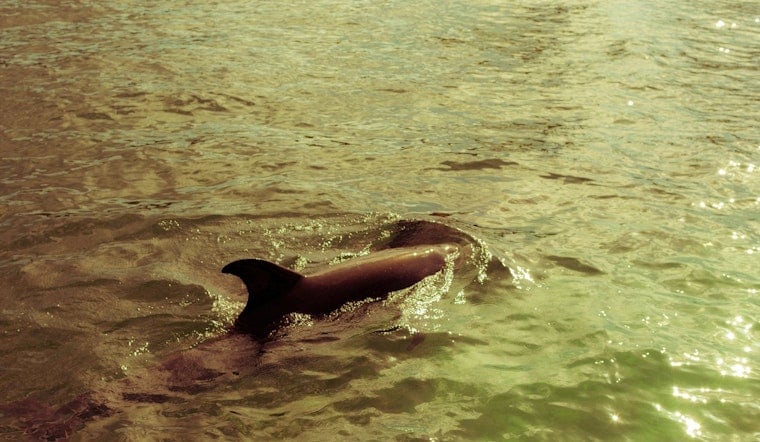
Responders in Jacksonville, North Carolina, expected a routine case when an adult female bottlenose dolphin washed up in Wilson Bay on June 6. The animal looked healthy at first glance. Then the necropsy started.
Investigators uncovered a nearly six-inch stingray spine lodged behind the dolphin’s skull, along with signs of a widespread infection that officials say likely played a major role in her death. Experts note that stingray barbs can carry venom and drive bacteria deep into tissue, creating infections that turn life-threatening once they reach critical areas like the head and spine.
According to The Charlotte Observer, the carcass was examined by the N.C. Aquarium at Pine Knoll Shores’ Marine Mammal Stranding Team, working with students from N.C. State University’s Center for Marine Sciences and Technology. In a June 24 social media post referenced in that reporting, aquarium staff shared a photo of the narrow, ice-pick–like spine, roughly six inches long, and noted that the meninges, the tissue layers surrounding the brain, were congested in the area of the wound.
“The infection surrounding the stingray spine at the base of the skull likely contributed to the reason this animal stranded,” N.C. Marine Mammal Stranding Coordinator Victoria G. Thayer told the paper.
Why a barb can kill
Stingrays rely on serrated, venomous tail barbs for defense, but it is often not the venom that proves most dangerous. The punctures are typically deep and contaminated, which creates a high risk of serious secondary infection, Poison.org explains.
Stranding and necropsy records show those spines can travel inside the body, occasionally migrating into vital organs such as the lungs, heart or spinal canal. A review by researchers at Mote Marine Laboratory documents cases in which embedded stingray spines were identified as the primary cause of death in multiple bottlenose dolphins. Taken together, those findings highlight how a single, relatively small barb can trigger systemic, often fatal problems once infection develops or when a spine penetrates crucial tissues.
Similar cases along the Southeast coast
This is not an isolated freak case. Off Kiawah Island, South Carolina, in 2024, responders found a roughly 2.75-inch stingray barb that had pierced a dolphin’s right lung, according to the Lowcountry Marine Mammal Network and coverage in The State. Stranding networks and research labs across the Southeast occasionally log similar encounters, which scientists largely attribute to dolphins hunting in shallow waters where rays are common or handling rays as prey.
The N.C. Aquarium team and its academic partners continue to study strandings to tease apart natural threats from human-related ones and to track broader patterns in marine mammal injuries. As noted by The Charlotte Observer, the aquarium points out that Atlantic stingrays are the most common stingray species in North Carolina waters and can tolerate brackish sounds and rivers. That ecological flexibility increases the odds that foraging dolphins will cross paths with them.
For researchers, each necropsy adds another data point to the larger story of how natural predator–prey interactions, alongside human impacts such as pollution and boat strikes, shape survival and mortality in coastal dolphin populations.





