

























































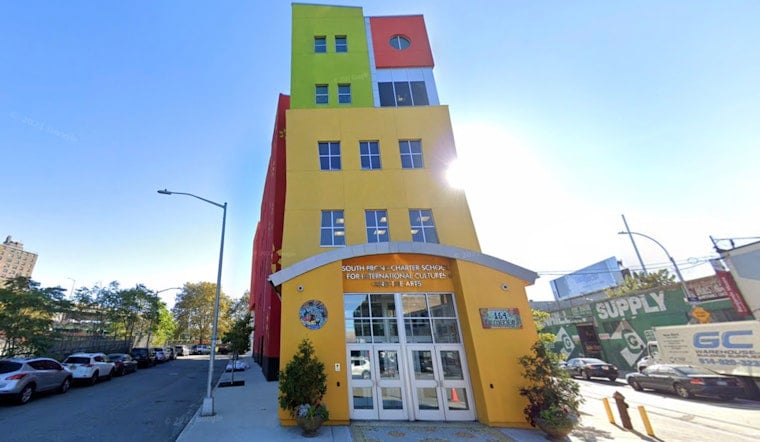
At a South Bronx charter school that promised a dual-language, arts-heavy path to college, this year’s seniors say their high school experience felt more like damage control than preparation. Graduating students at the South Bronx Charter School for International Cultures and the Arts describe years of chaos, staffing gaps and missed instruction, and say that only a small group of their original class will walk at graduation next week. They point to constant leadership churn and what they describe as a disorganized launch of the high school that left them scrambling for credits and Regents prep.
Several students say they filed formal complaints with the DOE Charter Schools Office alleging chronic understaffing, frequent staff turnover, an inconsistent curriculum and punitive practices, including revoked laptops and the school moving soap and mirrors outside restroom doors. They also submitted a list of demands calling on the school to hire qualified staff, provide proper resources for students with IEPs and English learners, and make counseling and coursework consistent so they can actually graduate on time. According to students, their freshman class started with about 30 students, but only 11 are expected to walk at graduation. Overall enrollment is listed at roughly 318 students, with 56 in grades 9 through 12 and an authorized capacity far above those current numbers, as reported by Bronx Times.
In a statement to the Bronx Times, Executive Director Evelyn Hey acknowledged “growing pains” as the school expanded into a high school and said leadership met regularly with students, families and staff to respond to concerns. Hey noted that she twice stepped in as high school principal during leadership transitions and emphasized that nine of the 11 seniors have been accepted to college. The school’s stated mission centers on a dual-language, arts-infused curriculum that still meets state learning standards, according to the school’s website SBCSICA.
Leadership and pay
Public filings show Executive Director Evelyn Hey received about $335,000 in 2023, according to nonprofit tax records. That figure appears in documents tied to the school’s nonprofit, as reported by ProPublica. At the same time, city school profiles paint a mixed picture: the K through 8 program posts strong results at the elementary level, while middle school scores and prior leadership turnover have raised questions about how smoothly a new high school program could be launched. Those trends are summarized in the school’s profile on InsideSchools.
What students say about classroom impact
Students say the real cost of that instability showed up inside classrooms. They describe long gaps in instruction, learning late that certain classes were required for graduation, and then having to pile on after-school work to make up credits. Several seniors say those issues left them underprepared for Regents exams and for more advanced coursework they expected to take in their final years. The group of freshmen who stayed through to senior year recall an uneven high school experience that they argue undermined academic progress during years that were supposed to set them up for college.
School documents and student complaints reflect the tensions that can surface when a charter operator pushes quickly into higher grades without the same stability it may have built in earlier years.
Legal steps and accountability
Under New York law, families and students raising concerns about charter schools are supposed to follow a specific complaint ladder. They must first bring issues to the school’s own board of trustees, then, if the problem is not resolved, take the complaint to the charter authorizer. After that, they may appeal to the State Education Department, which can investigate and order remedies when appropriate, according to the NYSED Charter Schools Office.
With graduation set for next Thursday, students and families say they want more than sympathetic meetings and general assurances. School leaders point to recent efforts to stabilize leadership and expand academic supports, while parents and advocates say they will keep pushing for clarity on staffing levels, special education services and consistent curriculum. This report will be updated as officials, the authorizer and the school provide further information.




