

























































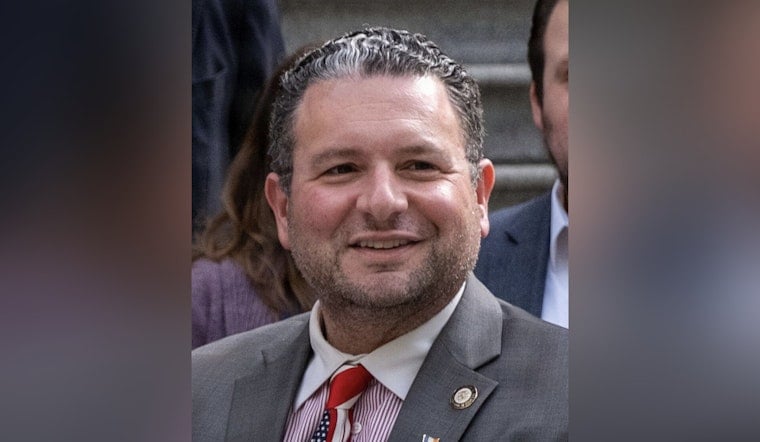
Staten Island Councilmember Frank Morano is pushing a sweeping change to how New York City votes in November, backing a law that would turn general elections into a single, nonpartisan ranked-choice contest. Under his plan, party labels would disappear from the November ballot for mayor, public advocate, comptroller, borough presidents and City Council races, and candidates would have to qualify through independent petitions instead of party primaries. Morano argues the setup would nudge voters to judge candidates on policy over party loyalty and cut down on so-called spoiler outcomes.
Morano recently doubled down on the idea on NY1’s “The Rush Hour,” telling viewers that ranked-choice voting “will allow voters to prioritize policies over party affiliation,” as reported by Spectrum News NY1. The appearance landed in the middle of a fresh round of debate over whether the city should extend ranked-choice voting beyond primaries and special elections.
What’s in the bill
The measure is filed as Intro. 0314 of 2026 and would amend the City Charter to require nonpartisan ranked-choice general elections for any elective municipal office, according to the City Council’s Legistar file. The proposal specifies that candidates would appear on November ballots without party designations and would reach the ballot only by filing independent nominating petitions, with the entire change going to voters as a City Charter amendment. Sponsors listed in the filing include Council Members Frank Morano, Farah N. Louis and Vickie Paladino.
How ranked-choice is used now and what would change
Right now, New York City uses ranked-choice voting only in primaries and special elections for mayor, public advocate, comptroller, borough presidents and City Council seats, not in general elections, according to NYC Board of Elections voter guidance. Extending the system to November contests would reshape how campaigns are run and would almost certainly require a major voter education push ahead of any referendum that puts the change on the ballot.
Politics and reaction
Local reporting has noted that Morano first floated versions of this nonpartisan ranked-choice idea late last year, and that any overhaul of general elections would need voter signoff and could face resistance from party leaders, according to the Staten Island Advance. Reform-minded groups, including the Forward Party, have praised efforts to broaden ranked-choice voting, while some party-aligned organizations warn that stripping party labels from the ballot could confuse voters or weaken accountability, as reported by IVN.
What comes next
The bill is still moving through the City Council’s committee process after being introduced on Jan. 29, 2026. If the Council ultimately passes it, the charter amendment language would go before city voters at a general election, according to the Legistar filing. Even with Council approval, carrying out the change would require the Board of Elections to rework petition procedures and ballot design and to run an extended public education campaign before any new rules hit voters’ actual ballots.





.jpg)