

























































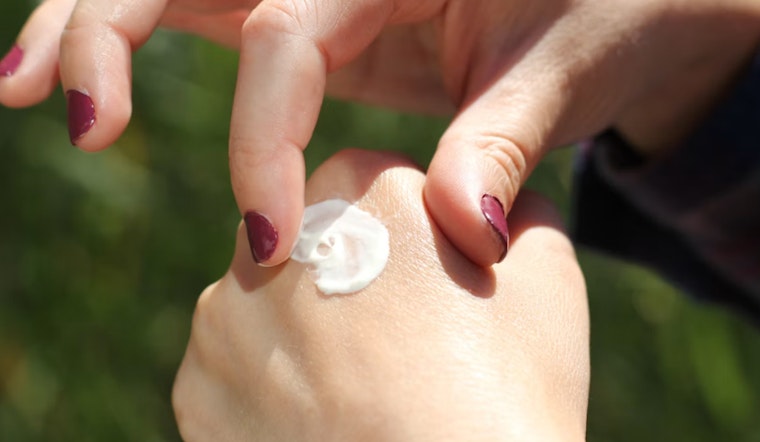
American sunscreen shoppers who have been waiting on more modern formulas finally got some movement from Washington. The Food and Drug Administration has added bemotrizinol, a broad spectrum UV filter long used overseas, to the list of permitted sunscreen active ingredients, marking the first new sunscreen active allowed in the United States since the late 1990s. The agency said the ingredient can be used in products for adults and for children six months and older, and that it showed low skin absorption in trials. The change opens the door to new sunscreen formulas that may offer stronger UVA protection while cutting down on the chalky white cast that mineral sunscreens often leave behind.
According to the FDA, the agency finalized an administrative order this week that adds bemotrizinol (often called BEMT) to Over the Counter Monograph M020 after reviewing clinical, nonclinical and manufacturing data. The agency said bemotrizinol protects against both UVA and UVB rays and determined it to be generally recognized as safe and effective (GRASE) when used under specified conditions. “This is exactly the kind of progress we can achieve when we modernize our processes and apply sound science to regulatory decisions,” FDA acting CDER director Mike Davis said in the release.
What bemotrizinol does
Bemotrizinol is a photostable, oil soluble organic filter that absorbs UVA1, UVA2 and UVB and can help stabilize other filters so formulators do not have to stack as many actives to get broad coverage. The ingredient was authorized in Europe around 1999 and has been widely used in sunscreens in Europe, Australia and parts of Asia for years, as reported by AP News. Supporters say bemotrizinol’s low skin absorption and photostability make it appealing for everyday wear.
How it got here
The push to bring bemotrizinol to the United States started with a Tier 1 over the counter monograph order request filed by DSM Nutritional Products LLC (now dsm firmenich). The company asked the FDA to allow the ingredient at concentrations up to 6 percent and in a range of dosage forms. DSM has marketed the filter internationally and has promoted the ingredient under the trade name Parsol Shield while leading the regulatory effort, according to dsm-firmenich.
How the monograph order works
The FDA’s final administrative order amends OTC Monograph M020 to set the conditions under which bemotrizinol containing sunscreens may be marketed, including limits on concentration, permitted combinations of active ingredients and allowed dosage forms. The order also gives DSM a statutory exclusivity period of 18 months from the date DSM may lawfully market products under the order, and it states that the final order takes effect 60 days after publication, per the FDA's final order.
Industry and public health reaction
The Environmental Working Group called the decision a major win for consumers, saying it should increase competition and modernize U.S. sun protection options. Reporters and dermatologists note that the filter’s photostability and cosmetic feel could make effective daily sunscreen easier to wear, and that DSM’s Parsol Shield is expected to debut in the United States later this year before other makers can use the ingredient after the exclusivity period ends.
What shoppers and parents should know
The FDA’s determination allows bemotrizinol in products labeled for adults and for children six months and older, but experts still advise keeping infants under six months out of direct sun and relying on shade and protective clothing as the first lines of defense. The American Academy of Dermatology recommends broad spectrum, water resistant sunscreens with SPF 30 or higher for children six months and older and suggests mineral options for particularly sensitive skin, per the American Academy of Dermatology.
The rule is a tangible sign that U.S. sunscreen regulation is starting to catch up with international practice, and it may prompt a wave of new formulations that make daily sun protection easier to stick with. For earlier coverage of this announcement see the Houston Chronicle.





