

























































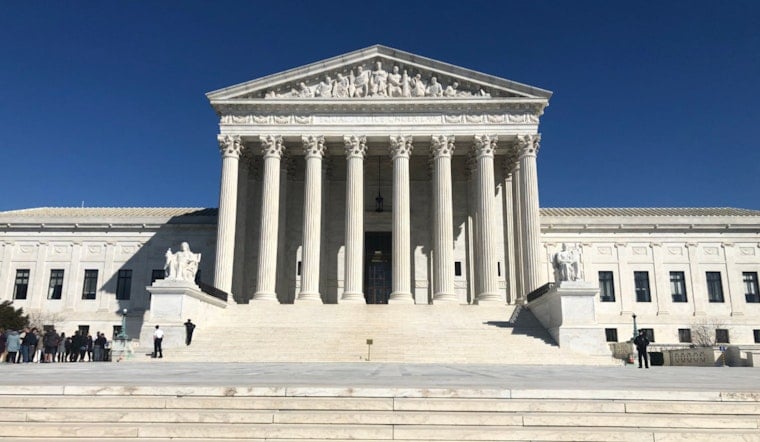
The U.S. Supreme Court on Monday passed on a closely watched challenge to the so-called Texas two-step, leaving in place lower-court decisions that have allowed companies to use the controversial restructuring move to corral mass-tort liabilities in bankruptcy. For plaintiffs and states that pleaded for the justices to step in, the refusal to hear the case is a clear setback, but the larger fight over the tactic is very much alive.
What the court did
The justices declined a petition asking them to review a Fourth Circuit ruling that had upheld a Texas-style divisional reorganization in the Bestwall asbestos litigation, effectively preserving the appeals court’s decision for now, according to Reuters. The petitioners had urged the Court to decide whether solvent companies may rely on Chapter 11 after a divisional split to protect affiliates from tort claims. By denying certiorari, the Court did not weigh in on that question; it simply left the existing ruling in place unless and until the justices agree to take up a similar case in the future.
How the Texas two-step works
The Texas two-step uses Texas divisional-merger law to carve a corporate group into two entities, assign legacy liabilities, often large volumes of mass-tort claims, to a newly created company, and then send that liability-heavy entity into Chapter 11 while the core operating business continues outside bankruptcy. That basic structure is outlined by practitioners at Haynes & Boone. Supporters argue that the move can channel thousands of individual lawsuits into a single bankruptcy forum, which they say can be more orderly and efficient. Critics respond that it allows otherwise solvent firms to cabin off risk, reduce payouts, and slow or block claimants from getting a traditional day in court.
Who brought the challenge
The push for Supreme Court review came from creditors and plaintiff groups seeking to hold original corporate parents responsible for long-running harms, along with official committees representing asbestos and other mass-tort claimants, according to filings in the Bestwall case. Records summarized at CaseMine detail an extended battle over jurisdiction, dismissal, and the scope of injunctions in that proceeding. A bipartisan group of senators and several state attorneys general also weighed in, filing briefs that urged the justices to take the dispute and tighten the rules around the Texas two-step, as noted in a release from the U.S. Senate.
Why it matters
The law on this strategy is now split across circuits. In Bestwall, the Fourth Circuit signed off on a divisional reorganization structure that offers broad bankruptcy protections, while in the LTL case involving a Johnson & Johnson spinoff, the Third Circuit rejected a comparable Texas two-step maneuver and applied a different test, according to appellate opinions. The Fourth Circuit’s reasoning appears in an opinion available at Leagle, and the Third Circuit’s treatment of LTL is summarized at FindLaw. The divide means that victims and companies may face starkly different outcomes depending on where a case is filed, raising the stakes for both claimants seeking compensation and firms looking to contain their exposure.
What comes next
With the Supreme Court staying out of the fray for now, attention is likely to swing back to Congress and the lower courts. Lawmakers have reintroduced a bill that targets the Texas two-step by presuming bad faith in certain divisional bankruptcy filings and by narrowing the reach of related injunctions, according to the U.S. Senate. Legal experts point out that a denial of certiorari does not resolve the underlying legal controversy, so the issue is likely to keep moving through trial and appellate courts, regulatory discussions, and legislative debates, leaving the broader policy fight unsettled for now.





