

























































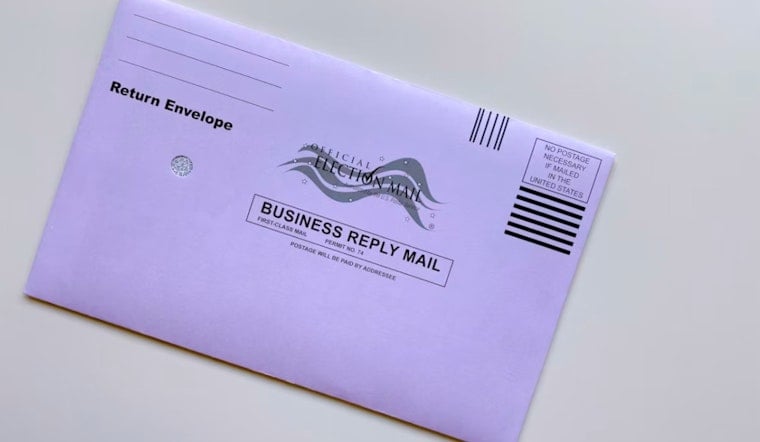
The Supreme Court on Monday tossed a key election fight back into the political arena, asking the Trump administration to weigh in on whether the justices should take up a Republican bid to enforce Pennsylvania's handwritten date rule for mail-in ballot return envelopes. That seemingly technical question has already cost thousands of voters their ballots and is now circling back to the high court.
Republican plaintiffs want the justices to restore Pennsylvania's long-standing requirement that voters write the date by hand on the outer envelope, arguing the step helps deter fraud, according to Reuters. The Republican National Committee and the Pennsylvania Republican Party have jumped in to defend the rule as well, Reuters reported.
The docket for Pennsylvania v. Eakin (No. 25-967) on SCOTUSblog shows just how active the case has become, with a rush of filings and waivers from county election boards. The justices' formal request for the government's views is a standard part of the certiorari process, but it is also a meaningful signal that can influence whether the court ultimately agrees to hear the dispute.
Plaintiffs in the Pennsylvania cases say the date rule has already led to thousands of discarded mail ballots, including roughly 4,500 in 2024 and more than 10,000 in 2022, according to Reuters. Critics point out that counties do not actually rely on that handwritten date to decide whether a ballot is timely or whether the voter is eligible. A federal appeals panel previously concluded that tossing out thousands of ballots over such a minor defect is not a reasonable trade-off; local coverage of that 3rd Circuit decision is available from WTAE.
All of this is unfolding while a broader battle over mail voting plays out in federal courts across the country. In Boston, a federal judge last week blocked key parts of President Trump’s March executive order aimed at limiting mail voting, a setback that The Washington Post reported, underscoring how multiple election-law fights are colliding ahead of the midterms.
Legal Questions At The Center
At its core, the Pennsylvania dispute mixes statutory and constitutional claims. Challengers argue that the handwritten date requirement violates the First and 14th Amendments, as well as federal civil-rights protections, because the date is not actually material to deciding whether someone can lawfully vote, a theory outlined in court filings and explained on SCOTUSblog. Supporters of the rule counter that the date field is a long-used election safeguard that helps preserve the integrity of the process and that state law permits the mandate.
What Happens Next
Now that the justices have asked for the administration's take, the next move belongs to the federal government. Its response could shape not only whether the Supreme Court grants review, but also how broadly or narrowly any eventual ruling might be framed. Any decision from the court would carry real-world consequences for county election offices, affecting everything from poll-worker training to how officials handle notice-and-cure procedures for flawed ballots as they prepare for the November midterms, an outcome reported by The Washington Post.





