

























































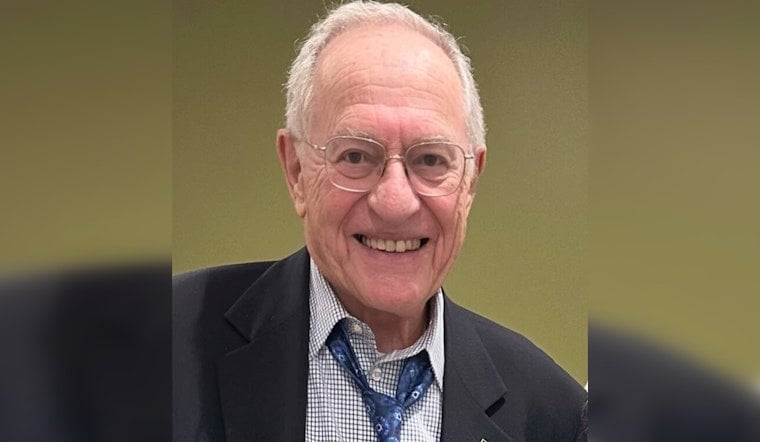
The U.S. Supreme Court on Monday declined to revive Alan Dershowitz’s $300 million defamation lawsuit against CNN, quietly closing the book on his last bid to get the justices to relax the high bar for public‑figure libel claims. The justices disposed of the case with a terse, one‑line order that leaves intact lower‑court rulings finding he could not show “actual malice.”
The court’s docket notes the denial on June 29, 2026. Justice Clarence Thomas, joined by Justice Neil Gorsuch, broke the silence with a brief dissent urging the court to reconsider landmark precedent on libel protections for the press. According to the Supreme Court docket, Thomas said he would have taken the case to examine whether the modern actual‑malice doctrine still squares with the Constitution.
Dershowitz’s suit stemmed from his televised defense of President Donald Trump during the 2020 impeachment trial. He claimed CNN selectively edited his remarks in a way that twisted their meaning, then amplified that edit with commentary that he said was defamatory. A federal district court sided with CNN, and the Eleventh Circuit affirmed, holding that Dershowitz had not produced evidence that the network or its on‑air talent acted with “actual malice.” As summarized in the Eleventh Circuit ruling, CNN offered unrebutted testimony that its journalists believed their coverage was fair and accurate.
The “actual malice” requirement, which forces public figures to prove that a publisher knew a statement was false or recklessly ignored serious doubts about its truth, comes from the Supreme Court’s 1964 decision in New York Times Co. v. Sullivan. The rule is meant to safeguard sharp‑edged debate about public officials and avoid chilling news coverage that can sometimes be wrong, according to Cornell’s Legal Information Institute.
In a separate opinion, Thomas openly questioned that foundation. As detailed in Justice Thomas’s dissent, he argued that the actual‑malice rule “bears ‘no relation to the text, history, or structure of the Constitution’” and said he would have granted review to revisit, narrow, or even overrule Sullivan. The short dissent signals that at least two conservative justices remain eager to test whether the court should pull back from the decades‑old shield it has given the press.
CNN, for its part, maintained in court papers that Sullivan remains a “cornerstone of modern constitutional law.” The network said it aired Dershowitz’s full remarks and even invited him back on air to explain them, while Dershowitz continued to describe the coverage as a deliberate distortion, according to The Associated Press. With the Supreme Court sitting it out, the Eleventh Circuit’s summary‑judgment decision stands in that part of the country, and the high bar for public‑figure libel remains the norm in most federal courts.
Legal Stakes for Press and Public Figures
In practical terms, Monday’s move is narrow. A denial of certiorari does not address who was right or wrong on the law; it simply leaves the lower court’s ruling in place for the parties involved and does not create nationwide precedent, as explained by LegalClarity. Still, legal observers note that the Thomas‑Gorsuch dissent keeps the long‑running fight over Sullivan very much alive, and that a future case with different facts could give the justices a cleaner shot at revisiting the doctrine, as reported by Law360.
For now, journalists, local newsrooms, and public figures are playing by the same rules. The actual‑malice standard continues to dominate libel litigation involving public figures, even as the visible split on the court suggests the argument over how protective that standard should be is far from over.





.jpg)