

























































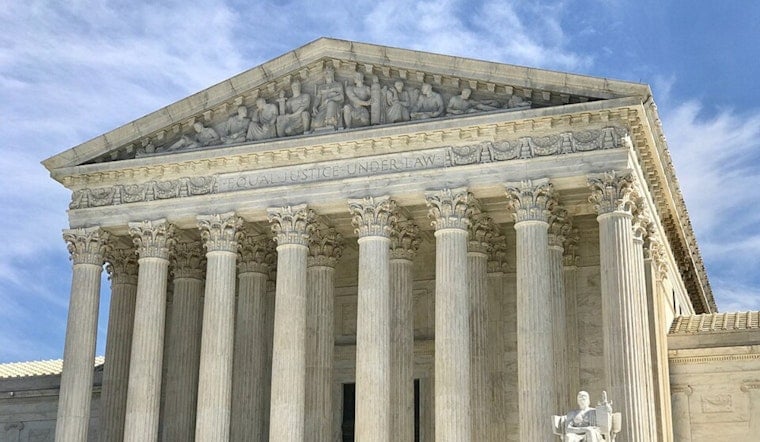
The U.S. Supreme Court on Monday cracked open the door to a high-stakes interstate water fight, permitting Nebraska to press its claims that Colorado has shorted South Platte River deliveries and meddled with plans for the Perkins County Canal. The move bumps a battle that has simmered in state offices into the nation’s highest court and raises the pressure on Front Range cities, eastern-plains farmers, and the nearly century-old South Platte River Compact. Lawyers on both sides are already warning that years of discovery, expert testimony, and technical hearings are likely before anything is settled.
The federal government’s top lawyer has been trying to keep the case on a tight leash. The Solicitor General urged the justices to focus only on whether Colorado has failed to send Nebraska its Article IV share of river water during the irrigation season and to send that fact-heavy question to a special master. According to a brief filed with the Court, Nebraska’s canal-related complaints are labeled premature and should be tossed for now, while the underdelivery claim is described as ready for original-jurisdiction review. The Solicitor General lays out that recommendation and explains why a special master would be the first stop.
On Monday, the Court granted Nebraska leave to file a bill of complaint, a procedural green light that lets the state seek enforcement of the 1923 South Platte River Compact in Washington. E&E News and other outlets reported that the justices have now moved the long-running interstate quarrel into their original jurisdiction docket.
Nebraska first went to the Supreme Court in July 2025, alleging that Colorado has allowed lower-priority users to divert water “out of priority” and that Colorado’s actions have obstructed Nebraska’s effort to develop the Perkins County Canal. The canal concept was dusted off in 2022, and state lawmakers committed major funding for the project, officials said when they announced the case. The AP reported on the original filing and the states’ dueling public statements last year.
Colorado leaders have pushed back hard, calling Nebraska’s allegations premature and politically motivated. Attorney General Phil Weiser said Colorado is “complying with the South Platte River Compact and not interfering with Nebraska’s efforts to build the Perkins County Canal,” and state officials urged the Court last fall to throw the case out. The Colorado governor’s office and Weiser’s comments are laid out in public filings and press statements the state has circulated.
What’s at Stake for Front Range Cities and Farms
The South Platte spills out of Colorado’s Front Range and serves as a lifeline for Denver-area cities and eastern plains agriculture, which means even subtle shifts in how the compact is read could ripple through communities and fields from the metro area to the Nebraska line. Colorado’s planning documents note that the Front Range and South Platte corridor hold the bulk of the state’s population and support hundreds of thousands of irrigated acres. Colorado’s Water Plan and related basin analyses lay out that demographic and agricultural backdrop.
On the utility front, Denver Water, which serves about 1.5 million customers across metro Denver and surrounding suburbs, depends heavily on mountain runoff and the South Platte system for a large share of its supply. That makes the case directly relevant to long-term municipal planning and drought operations, even if nothing changes overnight. Denver Water describes how those collection systems feed the broader service area.
Legal Stakes
Nebraska’s complaint leans on Articles IV, VI, and VIII of the 1923 compact. Article IV governs irrigation-season priorities, Article VI addresses potential canal rights for Nebraska, and Article VIII sets out Colorado’s duty to administer the compact. The Solicitor General has urged the Court to let only the Article IV underdelivery claim move forward and to refer those technical questions to a special master for detailed findings. The Solicitor General explains why the other compact claims are, in that office’s view, not yet ready or legally suited for original Supreme Court review.
Timeline and What Comes Next
The Court’s procedural order lets Nebraska file its bill of complaint, and once that lands on the docket, Colorado will be on the clock. Agricultural and regional outlets report that, under the Court’s schedule, Colorado will have about 30 days to answer after Nebraska files. DTN summarized the follow-up timeline.
If the Article IV claim moves ahead, the justices are expected to appoint a special master to take evidence, sift through streamflow records and augmentation plans, and prepare recommended findings. That kind of process can drag on for years and generate dense technical records that the Court eventually reviews. Environmental, municipal, and agricultural interests are already bracing for a drawn-out legal and permitting slog, and attorneys have told reporters not to expect this docket to go quiet anytime soon.
The Supreme Court’s action does not immediately change how water is delivered this season. It does, however, put long-standing interpretations of the compact and big-ticket infrastructure questions, including whether Nebraska can exercise the compact-reserved canal right, on a national stage. For communities from Ovid and Sedgwick County east into Nebraska, the coming year will revolve around court filings, expert reports, and high-stakes technical arguments that will help decide who gets how much of the South Platte for decades to come.





