

























































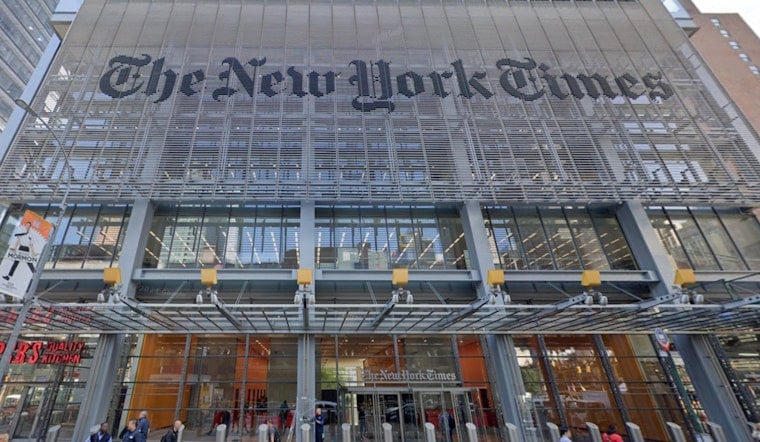
On June 25, 2026, The New York Times quietly but decisively trimmed its blockbuster copyright lawsuit over AI, narrowing the paper’s claims and dropping a key count aimed at OpenAI. The retooled filing puts more of the legal heat on Microsoft, the tech giant that provides much of the cloud muscle behind generative AI systems. The move reshapes one of the highest‑stakes tests yet of how copyrighted news content can be used to train and power chatbots.
Reporting from San Francisco, the paper’s own account in The New York Times says it has withdrawn a 2023 allegation that OpenAI was secondarily liable when users prompted chatbots to generate copyrighted material. Instead, the amended complaint adjusts how Microsoft is accused of contributing to the alleged copying. The filing attaches examples of a chatbot returning near‑verbatim excerpts of Times stories, which the newspaper argues show the models “seek to free‑ride” on its journalism. The revised pleading landed on June 25 on the docket of Judge Sidney H. Stein in the Southern District of New York.
The case, first filed in December 2023, is pending in Manhattan federal court under case number 1:23‑cv‑11195. There, the Times accuses Microsoft and OpenAI of copying “millions” of its articles to build large‑language models, according to the public docket. The long and growing list of motions, scheduling disputes and prior amendments is cataloged on Justia.
What the filing changed
In practical terms, the Times pared back one of its trickier legal theories. The newspaper has now dropped its earlier claim that OpenAI should be held secondarily liable for user prompts that allegedly produce infringing outputs. It kept the same examples of copied text, but now leans on them primarily as evidence of direct copying in training and output.
That leaves Microsoft as the central focus for claims of contributory or vicarious infringement. The Times alleges that Microsoft’s computing power, storage and related services “enabled” the training and operation of the models at issue. In other words, the infrastructure itself is part of the story, not just the model sitting on top of it.
OpenAI, for its part, has denied the allegations and maintained that it respects creators’ rights while arguing that using text for AI training falls within copyright’s fair‑use boundaries.
How this fits into the wider legal fight
The updated complaint arrives in the middle of a nationwide wave of AI‑and‑copyright lawsuits that has pulled in book authors, news organizations and other rightsholders. Judges across the country are sorting out how much discovery is enough, what sampling of training data is fair and whether particular AI outputs can be traced back to proprietary sources.
Those fights are not just academic. Last year, Anthropic agreed to a headline‑grabbing settlement that would pay roughly $1.5 billion to authors, a reminder of just how expensive these disputes can get. The Associated Press reported on that deal, while legal trackers note that the Times case sits among scores of related actions testing similar theories. LegalClarity
Legal implications
Direct infringement, contributory infringement and removal of copyright management information each come with their own evidence checklists. To pin liability on Microsoft under secondary theories, the Times would typically need to show things like a material contribution to infringement or a direct financial stake in infringing uses.
By tightening the complaint against Microsoft, the Times signals that it is prepared to lean into infrastructure‑oriented arguments. The public docket reflects briefing and exhibits that spell out how the newspaper believes Microsoft’s role in providing compute and services ties it to the alleged copying.
For the statute that defines federal copyright liability, see law.cornell.edu, and for the latest filings and procedural twists, the case record remains available on Justia.
Court dates and discovery deadlines are still being hammered out, and the amended complaint is almost certain to reshape upcoming motions and evidence requests. Whatever Judge Stein ultimately decides about the sufficiency of the Times’ new allegations, the suit is likely to remain a touchstone for how courts weigh publishers’ claimed economic harms against tech companies’ fair‑use defenses.
For now, both media companies and AI platforms are watching closely to see whether narrowing the complaint sharpens the Times’ path to a win or simply reroutes everyone into a longer legal slog. LegalClarity




