

























































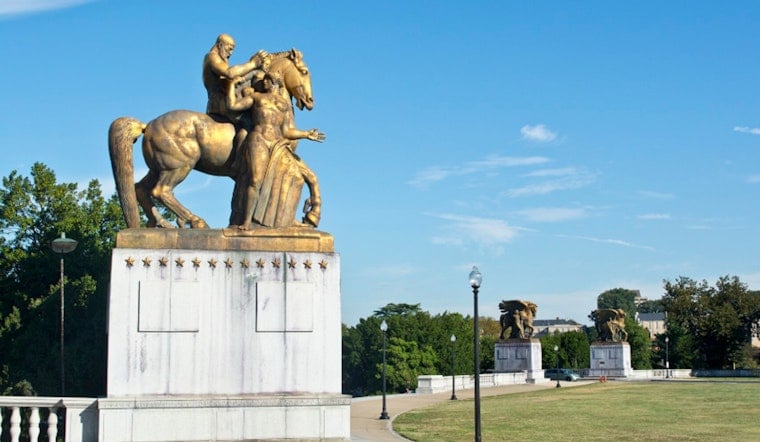
The Trump administration has signed off on a roughly $5 million plan to restore and regild the four monumental equestrian sculptures that flank the Lincoln Memorial, with a goal of having the horses shimmering in near-pure gold ahead of America’s 250th birthday. The project covers the paired statues commonly known as the Arts of War and the Arts of Peace and is on a tight schedule aimed at wrapping up before July 4 events. Park officials say the effort blends structural conservation with an unusually heavy application of gold leaf on the figures.
What the contract requires
A Department of the Interior special notice and scope of work call for conservation cleaning, repair of casting defects and corrosion, installation of containment and scaffolding, phased mock-ups, and the "application of 30-gram, 23.75-karat gold leaf" under a fixed timetable. The notice says the treatments must comply with the Secretary of the Interior’s Standards for the Treatment of Historic Properties and the American Institute for Conservation’s guidelines, according to SAM.gov. Public contracting summaries show that the award, contract 140D0426C0078, was posted in April, with about $5 million obligated so far, per Federal Compass.
Who the contractor is
The work went to a Maryland firm that specializes in architectural gilding and conservation. The contractor’s own site touts decades of exterior gilding and monument projects, and government award documents identify the company as the April recipient. Reporting on federal spending patterns has flagged the gilding deal as one of several fast-tracked capital projects ahead of the semiquincentennial. The Gilders' Studio is listed as the vendor, and NOTUS and others have documented the award and its compressed timeline.
Why critics are balking
Preservation advocates and procurement watchdogs argue the deal raises red flags because the National Park Service used an urgency justification and limited market research, which shortened the public notice period and narrowed competition. Internal agency records reviewed by The Washington Post show tens of millions of dollars in park fee revenue steered to beautification work around the capital tied to the 250th, heightening concerns about transparency and priorities. For critics, that mix of a tight deadline, a sole-source-style rationale, and a pricey, highly visible finish adds up to a procurement and preservation headache waiting to happen.
Legal and oversight questions
A separate preservation lawsuit is already underway over the Lincoln Memorial reflecting pool’s blue resurfacing, and that case has focused fresh attention on other accelerated National Mall projects. NBC News and other outlets have covered the Cultural Landscape Foundation’s complaint. Any legal outcome or congressional oversight from that fight could spill over into scrutiny of no-bid and sole-source awards tied to the 250th schedule. For now, the Park Service says the gilding work is moving ahead under its stated preservation standards as officials race to meet the anniversary calendar.
Whether the four horses end up gleaming in fresh gold or are brought back closer to their long-faded patina will be decided in the coming weeks as crews work under that compressed timetable. For visitors on the National Mall, the result will be hard to miss. For preservationists and watchdog groups, the project is shaping up as a test of how federal agencies juggle splashy deadlines, stewardship rules, and competitive contracting in one very high-profile corner of Washington.



