

























































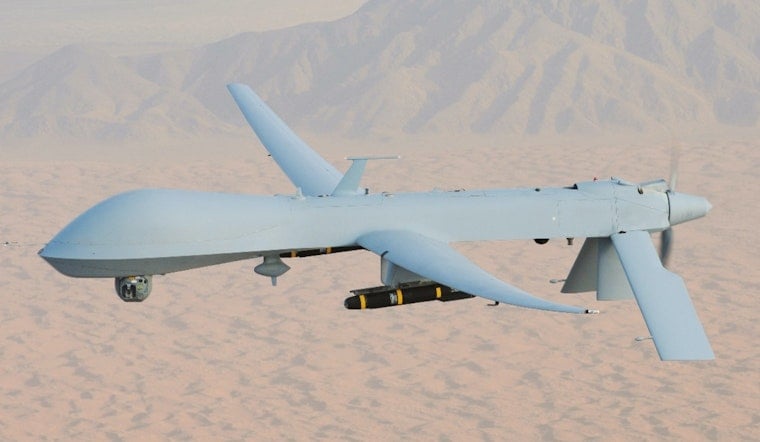
The U.S. military says it launched weekend airstrikes on Iranian radar and drone-control sites after Iran shot down an American MQ‑1 Predator drone operating in nearby international waters. The strikes, carried out Saturday and Sunday, reportedly hit positions on Goruk and Qeshm Island. U.S. officials said there were no American casualties, even as the flare-up adds new strain to an already fragile ceasefire and ongoing diplomatic talks to end the conflict.
In a public release, U.S. Central Command called the operation "measured and deliberate" and framed it as a response to "aggressive Iranian actions," including the shootdown of the MQ‑1 while it was flying over international waters. According to the command, U.S. fighter aircraft took out Iranian air defenses, a ground control station and two one‑way attack drones that it said posed threats to commercial ships transiting regional waters. The statement added that no American service members were harmed.
Iran's Claim And Regional Ripple Effects
Iran's Islamic Revolutionary Guard Corps said it had downed the U.S. drone, a claim carried by the state-run IRNA news agency and cited by The Associated Press. The same AP report noted that Iranian forces accused the United States of striking a telecommunications tower on an island. Separately, Kuwait said its air defenses opened fire early Monday to intercept incoming missile and drone fire, according to AP. All of this unfolded as diplomats worked the phones and airport lounges in a round of shuttle diplomacy aimed at locking in a ceasefire and restarting commercial shipping through the Strait of Hormuz.
Targets And Military Impact
U.S. Central Command said the U.S. strikes were aimed at radar sites and drone command-and-control nodes on Goruk and Qeshm Island, with the goal of weakening Iran's ability to surveil the area and launch one-way attack drones. The command described the operation as defensive, intended to remove what it called "clear threats" to commercial shipping and U.S. forces in the region. U.S. officials characterized the strikes as limited in scope and calibrated to avoid a wider regional escalation.
Why This Matters
The exchange is the latest in a series of tit-for-tat moves between Washington and Tehran that continue despite efforts to broker a longer-term ceasefire. Reuters reported that both sides have traded strikes in recent days tied to drone operations near the Strait of Hormuz and southern Iran. Diplomats warn that further incidents could make it even harder to restore normal commercial traffic through the Gulf's already tense chokepoints.
What's Next
U.S. officials say they will continue to defend American forces and commercial shipping while diplomats keep pushing for an agreement. At the same time, each new exchange narrows the margin for miscalculation. For now, the latest strikes serve as another reminder of how fragile the pause in larger hostilities really is and how quickly a single drone incident can send ripples across the region.





