

























































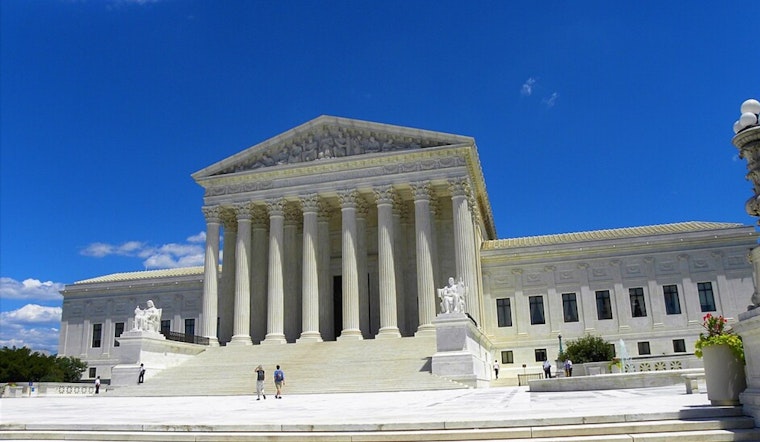
In a case that turns a quiet University Heights living room into a potential Supreme Court test case, Orthodox Jew Daniel Grand is asking the justices to decide how far a city can go in regulating home prayer before it violates federal religious-liberty protections.
Grand, who follows Orthodox practice that sometimes calls for a quorum of ten men for prayer, says he was told by University Heights officials in 2021 that inviting that many people to pray in his home would convert his house into a "place of religious assembly." That label, under city rules, would trigger a special-use permit process. Grand briefly applied for the permit, then pulled the plug, saying he refused to drag his family through a public zoning fight. After federal courts turned him away, he is now asking the Supreme Court to step in.
How The Dispute Started
In January 2021, Grand emailed neighbors to invite them to join a home minyan, the ten-man prayer quorum required for certain Orthodox rituals. According to the Sixth Circuit's account, the city's law director responded with a cease-and-desist letter, and the mayor publicly warned that operating a house of worship in a U-1 residential zone needed a special-use permit. That warning pushed Grand to file, then later withdraw, a permit application, as reflected in the appellate record as per Justia. The prospect of public hearings and anticipated neighbor objections led Grand to sue in federal court, arguing that the city's actions chilled his religious practice before it ever fully began.
Why The Courts Tossed The Suit
The federal trial court in Cleveland dismissed most of Grand's claims as unripe, and the Sixth Circuit agreed in a November 2025 decision. As JTA reported, the appellate judges held that there was no final administrative decision to review because Grand had withdrawn his special-use application before any zoning body actually ruled.
Grand's supporters take a different view. His lawyers and allied religious-liberty groups argue that the process itself, along with the city's threats and public statements, effectively punished him for trying to pray at home and deterred him from continuing. In their telling, that is enough of a burden to trigger federal protection for home worship, even without a final zoning vote, according to the NJAC brief.
Supreme Court Petition And Amici
Grand filed his petition for a writ of certiorari on February 11, 2026, asking the Supreme Court to review the Sixth Circuit's ruling. The Court's docket reflects that the petition was distributed for the justices' June 11, 2026, conference, the closed-door meeting where they decide which cases to hear.
Since then, the docket has filled with friend-of-the-court briefs from a diverse lineup of religious and advocacy organizations urging the Court to take the case. The National Jewish Advocacy Center, Agudath Israel and several conservative legal groups have all weighed in. One such filing, from Advancing American Freedom, presses the justices to resolve whether courts must hear "chilling-effect" claims like Grand's even when there is no final zoning decision.
Legal Context
The case sits at the intersection of two pieces of federal law that do not always play nicely together. On one side is the Religious Land Use and Institutionalized Persons Act, known as RLUIPA, which the Department of Justice describes as protecting religious assemblies and institutions from discriminatory or unduly burdensome land-use regulations according to the Justice Department. On the other side is the judge-made ripeness doctrine, including the Williamson County and related administrative-finality principles, which usually require a definitive government decision before federal courts will step in.
Grand and his allies argue that if cities can avoid issuing a final decision, yet still threaten enforcement that scares people away from worship, then RLUIPA protections are hollow. The city and its supporters counter that letting federal courts jump in too early could turn routine zoning back-and-forth into instant constitutional litigation.
Why Advocates Care And Local Reaction
Religious-liberty advocates say that if the Supreme Court sides with Grand, homeowners around the country who host small religious gatherings could get faster access to federal courts, without first enduring drawn-out public permitting and appeals. Some policy commentators and amici warn that shutting the courthouse door to early challenges, in situations where government threats already chill religious exercise, could give local officials a blueprint for keeping potentially discriminatory enforcement beyond review, as per Manhattan Institute.
Back in University Heights, the city has new leadership. Mayor Michele Weiss, who was not in office when the dispute began, told JTA that "everyone has a right to worship in their home with a small group of people." Supporters of Grand, pointing to the record in the case, insist this was no ordinary zoning dust-up and say the earlier enforcement went beyond neutral land-use concerns.
What To Watch Next
According to the Supreme Court's docket, the justices will consider whether to grant Grand's petition following the June 11, 2026 conference. Until they act, the Sixth Circuit's decision remains in place. If the Court agrees to hear the case, the eventual ruling could reshape when and how homeowners across the country can challenge zoning threats that they say put a chill on religious practice before the First Amendment is ever spoken.



