

























































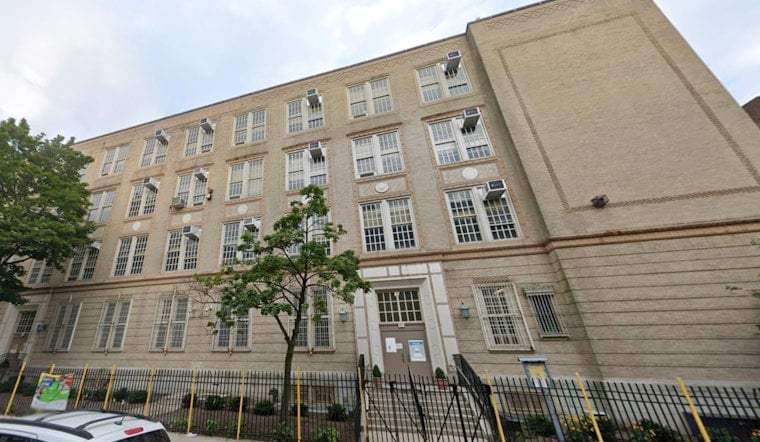
A packed meeting at P.S./I.S. 187 Hudson Cliffs in Washington Heights turned into a neighborhood showdown as parents and teachers argued over how to shrink class sizes without sacrificing the schoolyard. The School Construction Authority is pitching a new addition on the blacktop that would create extra classrooms but carve up outdoor play space and bring years of construction to the block. The standoff lays bare the tough tradeoffs New York City faces as it works to comply with a state law that caps class sizes.
Parents warned officials that the proposed project would saddle families with years of dust, noise and scaffolding while leaving younger students with a smaller play area. Tara Foley, a first-grade teacher at the school, told Gothamist she once had 32 students in a single class and now has 21, and that the building has already turned its art room into a standard classroom to handle enrollment.
The local fight is unfolding just as the city rolled out a systemwide class-size reduction blueprint that combines new hiring with bricks-and-mortar spending to meet the state mandate. According to an announcement from NYC Public Schools, the administration has proposed roughly $244 million to hire more teachers and another $1.5 billion in capital funds to build or convert classroom space.
Class Size Mandate Forces Hard Choices
The 2022 state law limits classes to between 20 and 25 students, depending on grade, and phases in tighter benchmarks over several years, a schedule that will require thousands of additional teachers and thousands of new seats. Reporting by Chalkbeat and city planning documents show the mandate will require roughly 80% compliance next school year under the phased timeline and full compliance on an extended schedule.
How It Plays Out At PS/IS 187
At PS/IS 187, the squeeze is already on. The school is operating about 25% above capacity and, according to reporting in Gothamist, only about 17% of its classes currently meet the new caps. Parents at the meeting said they worry the proposed addition would chew up precious outdoor space and subject kids to months of dust and noise, while teachers like Foley countered that smaller classes have clearly boosted students’ engagement and academic progress.
City planners say strategies like room conversions, annexes and targeted additions will be used to create extra seats in most neighborhoods rather than sweeping rezoning. The city’s class-size reduction plan outlines a multi-phase capital strategy in which the School Construction Authority and NYC Public Schools identify potential sites, assess which rooms can be converted and prioritize projects within the FY25-29 capital pipeline and beyond to add capacity where it is needed, a process described by NYC Public Schools.
Advocates and some parents argue that shifting enrollment to underutilized nearby schools would be a faster and cheaper way to bring down class sizes, while others warn that moving students can splinter programs and disrupt long-standing school communities. That tension in Washington Heights mirrors a citywide puzzle: the Citizens Budget Commission notes large enrollment swings in recent years and reports roughly 158,000 fewer students in recent counts, leaving a patchwork of underused and overcrowded buildings that defies easy solutions.
Officials are set to take public comment as plans are finalized this summer, and Washington Heights parents say they will keep pressing for options that protect smaller classes without wiping out the playground. For now, the debate at PS/IS 187 stands as a snapshot of the choices ahead for New York City families: accept more construction and less open space, or search for another way to give kids the smaller classes state law requires.



