

























































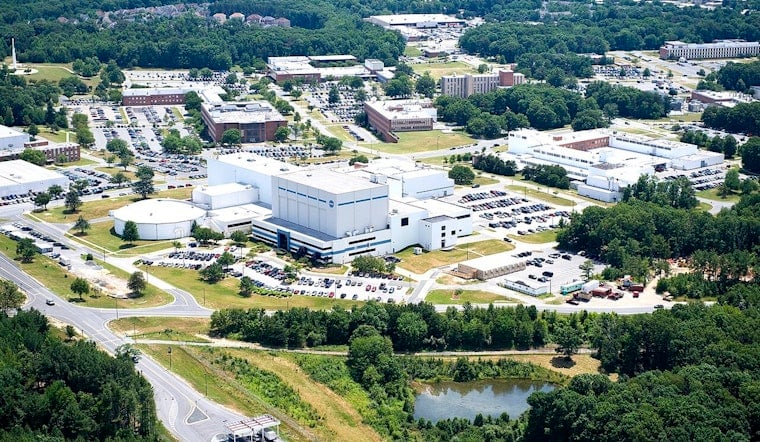
At NASA’s Goddard Space Flight Center just outside Washington, engineers are literally on the clock. Their assignment is to teach a small commercial robot how to pull off one of the trickier maneuvers in modern spaceflight: grab an aging telescope that was never meant to be serviced and nudge it away from an eventual fall back to Earth.
The robot, a startup-built servicer called Link, is being trained to rendezvous with the Neil Gehrels Swift Observatory, latch on, and slowly boost the spacecraft into a safer, higher orbit. Ground rehearsals and environmental tests are already in full swing as the launch window tightens later this month.
What Link Is And Why It Matters
NASA selected Arizona-based Katalyst Space Technologies last September to build Link, and the company has been working on a compressed schedule to meet Swift’s urgent needs, according to Space.com. The servicer is roughly the size of a refrigerator and carries three robotic arms, a suite of lidar sensors, and ion propulsion.
Together, those systems are designed to match Swift’s orbit, approach identified grab points, and then gradually lift the observatory toward roughly 600 kilometers in altitude. The fast timeline and relatively low price tag are being held up as a possible template for routine on-orbit servicing in the years ahead. If it works, the mission is the kind of “call a space mechanic” playbook NASA and commercial operators have been talking about for years.
Testing On Earth And In The Lab
Before any of that happens in orbit, Link has had to prove it can handle the trip upstairs. The servicer completed thermal-vacuum and vibration testing at NASA Goddard, where engineers fired its ion thrusters and ran through arm deployments in space-like conditions, as detailed by NASA.
From there, teams moved into hardware-in-the-loop runs and air-table microgravity simulations to fine-tune Link’s guidance and grappling software. On the ground, crews rehearsed capture scenarios using a full-scale Swift mockup mounted on an industrial robotic arm, a setup that let them practice the delicate dance of closing in and grabbing hold, according to WRAL.
An Air-Dropped Rocket And A Vintage Mothership
Getting Link to the right orbit on a tight schedule requires a slightly old-school ride. The servicer will launch on a Pegasus XL booster that is released from Northrop Grumman’s Stargazer L-1011 carrier aircraft, then ignites on its way toward orbit, Spaceflight Now reports.
Pegasus’s air-launch setup gives the mission access to Swift’s low-inclination orbital plane without an expensive launch redesign, and Stargazer is effectively the only mothership still flying that can carry Pegasus. That pairing helped the team hit the narrow launch window set by Swift’s accelerating orbital decay.
Why This Is High-Risk And High-Reward
Katalyst has been blunt about the stakes. Swift’s orbit is deteriorating rapidly, and the company has cited a very high probability of uncontrolled reentry by the end of 2026, a figure reported by Gizmodo.
If Link can capture the observatory and gently reboost it, mission teams say Swift could be shifted to a significantly higher orbit and remain scientifically productive for many more years, potentially even decades, according to reporting and mission briefings. For a high-value science asset, that kind of life extension is exactly why engineers argue the risks of a rapid commercial servicing job are worth taking.
Next Steps
In the coming days, engineers will integrate Link with its Pegasus rocket at NASA’s Wallops Flight Facility before Stargazer hauls the stack to the Kwajalein launch zone, according to Spaceflight Now.
If launch and rendezvous go as planned, the capture and the months-long reboost will be watched closely across the space industry as a test case for commercial satellite servicing. Whatever the outcome, the mission will show whether a startup-built robot can safely stretch the working life of a flagship NASA observatory instead of letting it fall back to Earth.





