

























































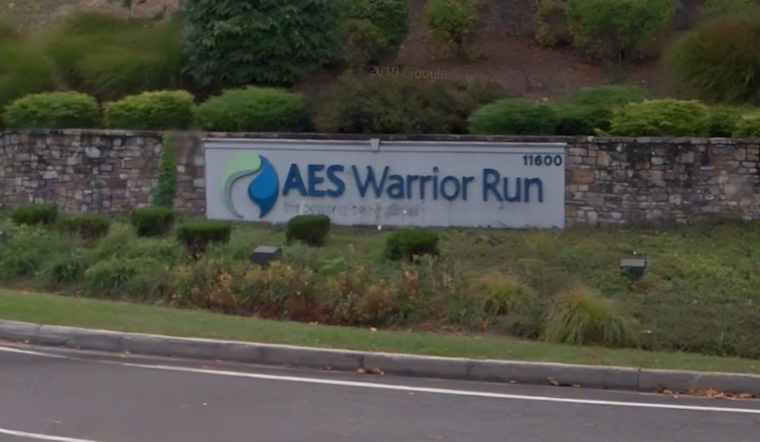
Federal money and some very strained grid math have shoved a long-dormant coal plant back into the center of Maryland’s energy debate. On June 4, the federal government tapped AES’s shuttered Warrior Run facility outside Cumberland for a $78 million award to study and potentially restart the roughly 205-megawatt plant that went idle in 2024. What began as a local fight over jobs is now tangled up with regional grid reliability planning and the state’s climate deadlines.
The U.S. Department of Energy lists AES Warrior Run among a short list of projects funded under its “Restoring Reliability: Coal Recommissioning and Modernization” program, with $78 million earmarked to recondition equipment and evaluate options such as carbon capture, according to the U.S. Department of Energy. DOE’s summary notes a matching non-federal contribution that roughly doubles the project’s total value. Officials have described the awards as milestone-based investments that aim to preserve or restore generating capacity in areas where plant retirements have gotten ahead of transmission upgrades.
Federal Push, National Context
Industry coverage has cast the Warrior Run award as part of a broader federal effort to bolster coal capacity and grid resilience. Reporting has highlighted similar awards and feasibility grants for plants in Puerto Rico, Alaska, and West Virginia, while analysts caution that subsidies may not reverse coal’s long-term economic slide, according to S&P Global and POWER. In the near term, though, the economics look different. Higher wholesale power prices and a surge in data-center demand have reshaped how plants run in PJM’s territory, which helps explain why grid operators and plant owners are revisiting retirement plans they thought were settled.
Grid Reliability and Brandon Shores
PJM has repeatedly told regulators it needs temporary reliability fixes while multi-year transmission projects are built, and its internal materials outline plans to extend tariff rules that allow large units such as Brandon Shores to keep counting as capacity beyond earlier retirement dates, according to PJM. Talen Energy’s recent SEC disclosures describe a reliability-must-run settlement and related FERC approvals that keep Brandon Shores and the nearby H.A. Wagner units operating through at least May 31, 2029, unless the transmission work is finished earlier, according to Talen’s filings with the U.S. Securities and Exchange Commission. These are paid-for reliability bridges, not endorsements of coal as a long-term business-as-usual plan.
Local Politics in Cumberland
In Cumberland, the conversation lands closer to home: payrolls and tax receipts. “I’ll take AES Warrior Run coming back online however they do it,” Mayor Ray Morriss told The Baltimore Banner, capturing local enthusiasm for a restart even as state policy leans hard toward deep emissions cuts. State records and facility filings show Warrior Run operated as a roughly 205-megawatt coal cogeneration plant starting around 2000 before deactivating in 2024, and the company filed WARN notices when it idled, underscoring what the shutdown meant for local jobs. The site still appears in state environmental inventories.
Climate Goals vs. Reliability
Maryland’s 2022 Climate Solutions Now Act sets a legal target of net-zero, economy-wide emissions by 2045, with an interim cut on the order of 60 percent by 2031, creating an obvious tension with any short-term revival of coal, according to the bill text and state planning documents. At the same time, coal’s share of Maryland’s in-state generation has collapsed, from more than half a decade ago to roughly 6 percent in recent data, a shift charted by the U.S. Energy Information Administration and the Maryland legislative record. That friction helps explain why state officials, consumer advocates, and grid planners are combing through regulatory filings for every tradeoff between cleaner energy and near-term reliability.
How This Plays Out Legally
Any restart or extended operation sits on top of a dense stack of approvals: DOE’s milestone payments, PJM market rules and FERC sign-offs, plus state regulators’ decisions on cost recovery and how transmission expenses get allocated. Talen’s filings and PJM documentation show that many of these arrangements have already been contested and appealed, so questions about ratepayer impacts and compliance will be worked out in more filings and hearings in the months ahead. Federal money can kick off activity, but it does not clear the permitting, market, and legal hurdles that follow.
For now, the DOE award has pushed Warrior Run back into the headlines without locking in a long-term future for coal in Maryland. The governor’s office has said AES is also studying non-combustion uses for the site, including batteries, so even a short-term restart could function as a bridge to a different kind of project rather than a full return to coal, according to reporting in The Baltimore Banner.



