

























































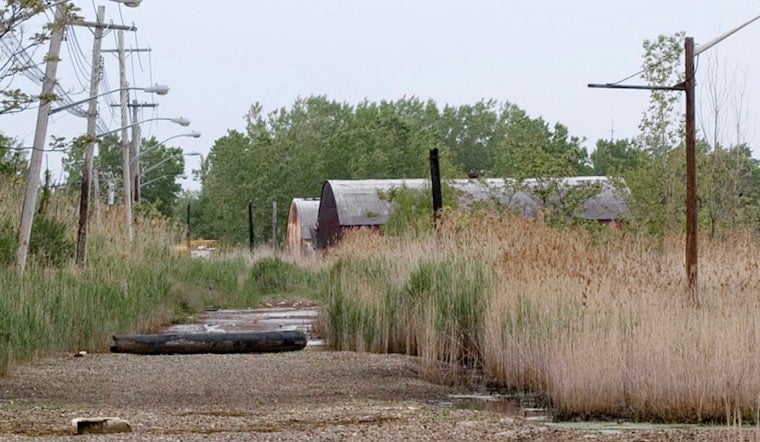
Queens’ long-forgotten Flushing Airport, tucked into the marshes of College Point, is on track to be reborn as a full-blown neighborhood. Developers and city officials are pitching roughly 3,000 new homes wrapped around nearly 60 acres of parkland on an 80-acre former airfield, in a $3.2 billion plan that promises union jobs and workforce housing while stirring old neighborhood fights about traffic, sewers and the fate of the wetland that has slowly taken the runways back.
According to a press release from NYCEDC, a joint venture led by Cirrus Workforce Housing and LCOR would build about 3,000 homes and carve out nearly 60 acres of public open space, a combination the city projects will generate roughly $3.2 billion in economic activity over the next 30 years. The proposal is expected to create about 1,300 union construction jobs and around 530 permanent positions, with construction slated to start in 2028 after the city’s Uniform Land Use Review Procedure and a full environmental review are finished.
A Forgotten Airfield With A Long History
The site opened in 1927 as Speed’s Airport and, for a brief period before LaGuardia came online, was the busiest airfield in New York City. It officially shut down in 1984 and has since largely reverted to marsh and scrub, as reported by Time Out. That arc, from plane service to wildlife refuge, is part of why the property is both appealing to developers and a flashpoint for conservation advocates.
Designers Say Housing And Habitat Can Coexist
Renderings and landscape plans from the design team highlight elevated boardwalks, overlooks and low-impact trails aimed at restoring freshwater wetlands while opening the area to the public, according to Starr Whitehouse. The development team also says it will explore mass-timber construction and commit to building with 100% union labor, a point NYCEDC underscored in its announcement.
Neighbors Raise Infrastructure And Environment Alarms
Some College Point civic leaders and environmental groups argue the neighborhood simply does not have the roads, school capacity or sewer infrastructure to handle thousands of additional apartments, and warn the project could worsen local flooding and damage the freshwater aquifer, according to reporting by CBS New York. The developers counter that the plan will clean up contaminated soils, preserve much of the existing wetland habitat and fold traffic and stormwater upgrades into the public review process.
Regulatory Hoops: ULURP And Environmental Review
Before any demolition or grading can begin, the proposal must clear the city’s Uniform Land Use Review Procedure and a state environmental review, and all cleanup work has to meet New York State Department of Environmental Conservation standards. The agency has already been involved in permitting around the site in recent years. Detailed plans for stormwater management, contamination remediation and traffic mitigation will roll out during that process, giving neighbors and government agencies a chance to push for safeguards and also giving the city a test of whether building around the marshland can avoid increasing flood risk, according to NYSDEC.
What To Watch Next
City Hall is casting the Flushing Airport plan as part of the mayor’s broader housing agenda, an effort the Mayor’s Office says is meant to reach a "moonshot" goal of 500,000 homes. In the coming months, expect ULURP hearings, technical studies and community meetings where residents can argue over everything from traffic counts to bird habitat. For more background, see the city’s announcement from NYCEDC and Hoodline’s earlier deep dive on the plan as public filings start to drop.



