

























































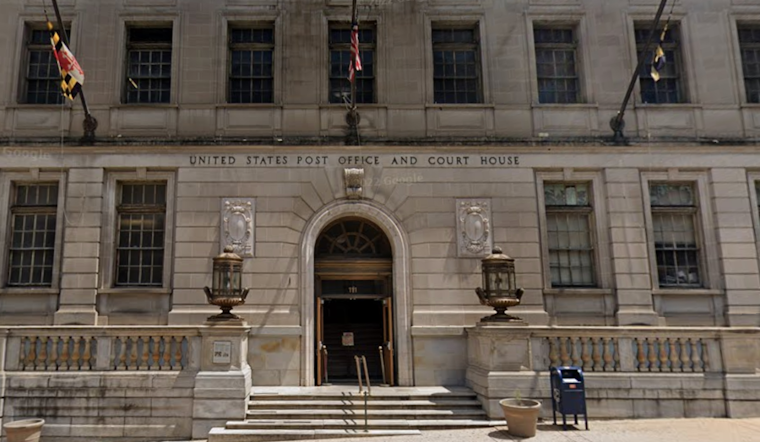
Jury selection had barely kicked off Tuesday morning at the Cummings Courthouse in downtown Baltimore when a man accused of opening fire near an MTA bus told the judge he was cutting his lawyers out of the picture and going it alone.
The defendant, 43-year-old Antonio Nance, appeared without counsel and formally waived his right to appointed representation as the panel was being picked. The case traces back to an Aug. 12, 2025, confrontation on an MTA bus that prosecutors say spilled onto the 2700 block of W. Franklin Street and ended with gunfire outside.
According to court filings and local reporting, prosecutors say the trouble started on the bus when Nance pushed another rider and told him to “get off.” The victim ran around the vehicle, at which point Nance allegedly fired multiple shots, missing the man. He is charged with attempted murder, first-degree assault, reckless endangerment, and several weapons offenses, as reported by Baltimore Witness.
Defense attorneys had earlier asked for more time to replace counsel, but Judge Melissa K. Copeland previously found good cause to go beyond the defendant’s April Hicks date, and Judge Jeffrey M. Geller later denied a motion to toss the case on speedy-trial grounds. In court, the judge warned Nance that "you will be unrepresented" if he kept insisting on self-representation and reminded him he does not have the right to choose appointed counsel. Those courtroom exchanges were detailed by Baltimore Witness.
Legal context
Under Maryland practice, the "Hicks date" generally requires a circuit court trial to begin within 180 days of a defendant’s or counsel’s first appearance, although judges may extend that deadline for good cause. The rule is meant to keep criminal cases from lingering too long on the docket, while still giving both sides room to prepare. Explanations of how that timing works appear in rulings from Maryland courts.
The U.S. Supreme Court also recognizes a criminal defendant’s right to refuse counsel and proceed pro se, but courts must first make sure any waiver is knowing and intelligent and usually spell out the practical risks of acting as your own lawyer. That framework comes from the Court’s Faretta decision, available via FindLaw. Judges are left to balance a defendant’s autonomy, constitutional protections and crowded court calendars, all while trying to keep a trial on track.
Jury selection on Nance’s case was expected to continue into the afternoon at the Circuit Court for Baltimore City, inside the Cummings Courthouse at 111 North Calvert Street. The court’s website lists scheduling and jury information for the public, and the proceedings will be watched closely as the trial moves forward with the defendant acting as his own counsel.





