

























































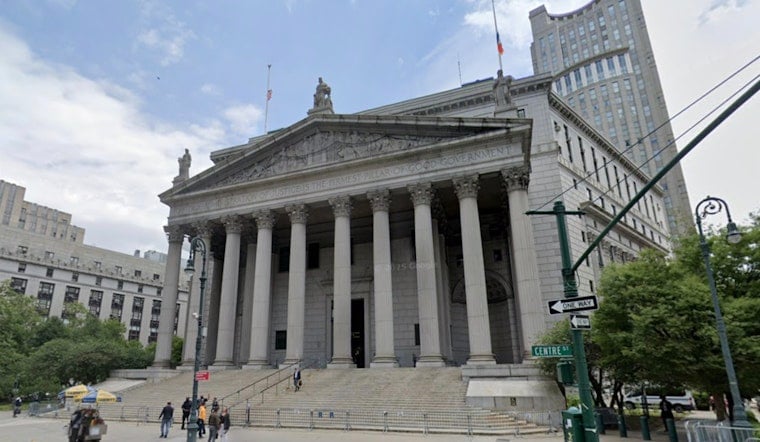
Nearly fifty New York Supreme Court justices are asking to keep their robes a little longer this summer, and reformers are not letting the moment pass quietly. Forty‑nine justices have applied to be certified to serve past the state’s mandatory retirement age, and the rare mass renewal has prompted an aggressive challenge from watchdogs who say at least a few should be shown the door.
In a detailed 24‑page filing, the Center for Community Alternatives is urging court leaders to deny recertification to four sitting justices, arguing that a trail of appellate reversals, reassigned cases and sentencing mistakes should disqualify them from extra time on the bench. The Administrative Board of the Courts, a small but powerful panel that can grant two‑year extensions up to age 76, is expected to sift through the applications in the weeks ahead.
As reported by Gothamist, the Center for Community Alternatives used the seven‑week public comment window to formally object to the recertification of Justices Mario Mattei, Laura Ward, Timothy Mazzei and Thomas Moran. The group wrote that the four “do not possess the legal ability and competence necessary for continued judicial service,” backing up that claim with case examples and aggregated court data. The organization’s full 24‑page letter is available online.
Which Judges Are in the Hot Seat
The challenge leans heavily on measurable patterns in appeals and resentencing decisions, not just a handful of headline‑grabbing rulings.
Data from Scrutinize, the judicial‑transparency project whose numbers underpinned the Gothamist review, show that Moran’s evidentiary rulings were overturned six times in 51 appeals, and that appellate panels twice reassigned cases away from him. Ward’s suppression rulings were reversed five times out of 74 appeals. Mazzei had five sentences reduced on appeal that together cut roughly 30 years off the original terms, while modifications to Mattei’s sentences erased more than 40 years in total. The letter argues those figures reflect a pattern rather than isolated slips.
Moran receives particular scrutiny for a stop‑and‑frisk arrest he presided over that appellate judges later tossed out, a decision that helped pave the way for a multimillion‑dollar award to the man who spent years behind bars. That payout was reported by the Democrat & Chronicle.
The filing also flags Mazzei’s record while noting that he recently oversaw the high‑profile sentencing of Rex Heuermann. Multiple sentences imposed by Mazzei have been reversed as excessive, even as Heuermann himself was sentenced to life earlier this summer, a proceeding covered by ABC News.
How New York’s Certification Game Works
Under New York’s Constitution and Judiciary Law, judges must retire at age 70. Retired Supreme Court justices, however, can apply to be “certified” by the Administrative Board for additional two‑year terms. Those terms can be renewed up to three times, which means a justice can continue to serve until age 76.
The state’s highest court has explained that certification hinges on two findings: that the justice is mentally and physically able to keep working, and that their continued service is needed to help “expedite the business of the courts,” according to the New York Court of Appeals.
Transparency, or Lack Thereof
Advocates say the process operates largely in the dark. The Administrative Board does not publicly announce which judges are approved or denied, and the public comments submitted during the review period are kept confidential.
“A process with zero transparency and accountability ... is extremely problematic,” Oded Oren of Scrutinize said. Former Administrative Board member Rolando Acosta told Gothamist that internal dossiers, medical exams and supervisor evaluations all factor into the decision‑making. Reform groups argue that secrecy makes it easier for mistakes to be overlooked, while court officials counter that the vetting is rigorous and necessary to keep courts adequately staffed.
The Administrative Board now has a choice with very real courtroom consequences: deny recertification and clear the way for new judges, or grant extensions that keep veteran jurists on the bench. Either way, the outcome will determine who is ruling on suppression motions, handing down sentences and making other daily decisions that shape the lives of defendants and victims across New York.





