

























































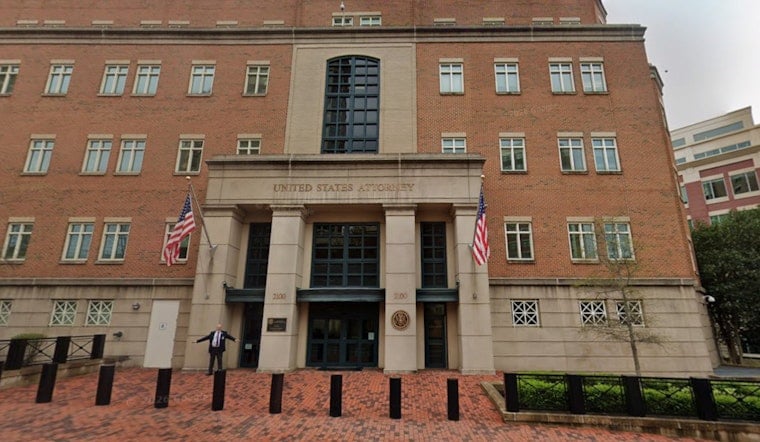
At the federal courthouse in Alexandria, a judge on July 2 sentenced 59-year-old Antoine Kassis to 30 years in prison after a jury found him guilty in a sweeping narco-terrorism and terrorism-support conspiracy. Prosecutors say Kassis leaned on connections dating back to the Assad era to broker weapons-for-cocaine swaps that stretched from Colombia and Mexico through parts of Africa into the Middle East. The scheme allegedly included a plan to hide hundreds of kilograms of cocaine in a shipment to Syria and a laundering network that pushed nearly $100 million through the system.
According to prosecutors in Alexandria, Kassis kept high-level contacts even after the Assad regime’s fall and negotiated an April 2024 deal to divert Syrian military weapons to Colombia’s National Liberation Army (ELN) in exchange for hundreds of kilograms of cocaine. Jurors convicted him at trial in March, and the 30-year sentence followed on July 2, as detailed by the U.S. Attorney’s Office for the Eastern District of Virginia.
How prosecutors say the pipeline worked
Investigators say Kassis traveled from Lebanon to Kenya to meet an ELN weapons inspector and then signed a contract to bring in a fruit container from Colombia to the Port of Latakia. Tucked inside, they allege, would be 500 kilograms of cocaine ready for distribution across the Middle East. Evidence introduced at trial showed co-conspirators laundered nearly $100,000,000 in under 18 months and moved funds for criminal groups including the Sinaloa cartel and Hamas.
The Drug Enforcement Administration’s Special Operations Division led the investigation, leaning on field offices across the globe to track money, meetings and shipments, according to the DEA.
International takedown and extradition
The Department of Justice’s Office of International Affairs worked with Kenyan authorities to arrest Kassis and secure his extradition to the United States in May 2025. The operation pulled in a roster of international partners, including U.S. Customs and Border Protection, Colombia’s Cuerpo Técnico de Investigación, Ghana’s Narcotics Control Commission and Police Service, Morocco’s General Directorate for National Security and Kenya’s Directorate of Criminal Investigations. Those agencies were credited with providing crucial assistance by the U.S. Attorney’s Office for the Eastern District of Virginia.
Legal implications
Kassis was convicted of narco-terrorism conspiracy and conspiring to provide material support to a designated foreign terrorist organization, counts that carry steep federal penalties. The material-support statute, 18 U.S.C. § 2339B, allows prison sentences of up to 20 years, according to Cornell Law School. Federal drug statutes, meanwhile, impose long mandatory minimums for trafficking large quantities of cocaine, as outlined on Congress.gov.
Why the case matters
Prosecutors portrayed the conviction as a rare example of one insider allegedly tying remnants of a state arsenal to transnational drug and terror networks, a mix that heightens both security and trafficking fears. Law-enforcement officials pointed to the case as proof that multinational cooperation can crack an unusually global supply chain, a point emphasized by the DEA. Local reporting from the Tampa Free Press has also summarized the sentencing and trial details for readers following the case from abroad.





