

























































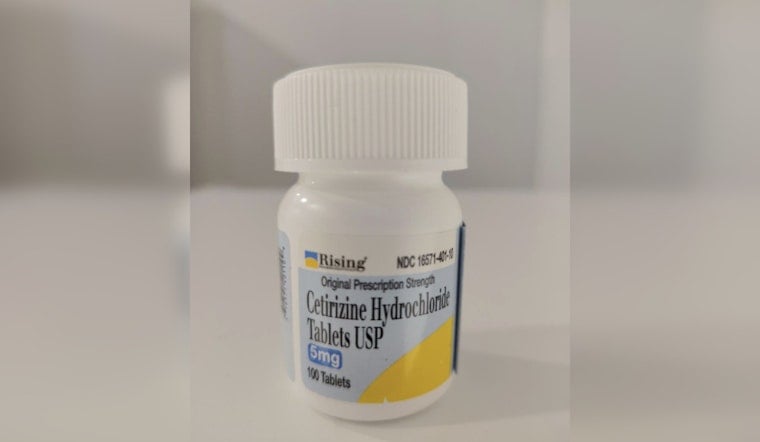
Allergy sufferers might want to take a second look at their medicine cabinets. A nationwide recall is underway for certain bottles of cetirizine hydrochloride after the manufacturer warned the tablets may have been cross-contaminated with ranitidine, a different stomach medication that can trigger life-threatening allergic reactions in some people. The recall affects 5 mg tablets in 100-count bottles sold under a Rising Pharma label and shipped to wholesalers and retailers across the country. Anyone with a known sensitivity to ranitidine is urged to check their medication labels and contact a clinician right away if they notice symptoms such as trouble breathing, swelling of the face or throat, or fainting.
What Was Recalled
Unique Pharmaceutical Laboratories says it is voluntarily recalling four lots, GY825029, GY825030, GY825031 and GY825032, of Cetirizine Hydrochloride Tablets USP 5 mg. The tablets are packaged in 100-tablet HDPE bottles, NDC 16571-401-10, with October 2028 expiration dates, according to a company announcement posted by the U.S. Food and Drug Administration. Rising Pharma Holdings distributed the product nationwide and is arranging for returns of affected stock, and the notice says the bottles were shipped to several wholesalers and retailers across the United States.
Health Risk
In the company announcement, posted on the FDA site, Unique Pharmaceutical Laboratories warned of the potential for "severe hypersensitivity reactions and anaphylaxis," listing symptoms such as hypotension, dyspnea and throat or facial edema. The company said it has not received reports of adverse events linked to these specific lots so far, according to the FDA. For consumers who are allergic to ranitidine, even trace contamination could be dangerous.
Why Ranitidine Matters
Ranitidine, best known by the brand name Zantac, was effectively pulled from the U.S. market in 2020 after regulators found it could contain or form N-nitrosodimethylamine (NDMA), a probable human carcinogen. That history makes any hint of ranitidine contamination a bright red flag for regulators and pharmacies. Experts and regulators are still studying nitrosamine impurities and how they form in drug products, particularly when different medicines are manufactured on the same equipment, according to a review available on PubMed Central.
What To Do If You Have The Pills
Check any 100-count bottle for NDC 16571-401-10 and the lot numbers listed above, and stop using the product if the tablets appear discolored or you notice unusual spots. Rising Pharma has set up a consumer line at 1-844-874-7464 and provided the emails [email protected] and [email protected] for questions and returns, according to Boston 25 News. If you develop signs of an allergic reaction, including hives, trouble breathing, swelling of the face or throat, or lightheadedness, seek emergency care immediately and tell providers about any recent medicine use.
Distributors say they are coordinating returns, and retailers are being asked to pull affected bottles from store shelves. If you purchased the product at a pharmacy, check with the store before bringing it back. This story will be updated as regulators and the companies involved release more details.




