

























































Four political organizers tied to the African People’s Socialist Party and an Atlanta affiliate are asking a federal appeals court to wipe out their 2024 convictions for secretly acting at the direction of Russia, turning a technical registration case into a high-stakes First Amendment fight.
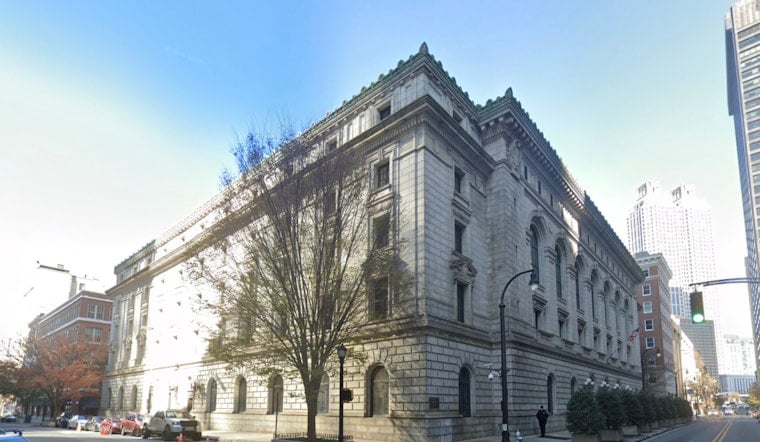
At oral arguments Wednesday in Atlanta, lawyers for Omali Yeshitela, Penny Hess, Jesse Nevel and Augustus Romain Jr. urged a three judge panel of the 11th U.S. Circuit Court of Appeals to overturn a jury’s finding that they conspired to operate as unregistered agents of a foreign government. All four were convicted last year, then sentenced to probation and community service. The judges repeatedly pressed both sides on a core question that could reverberate far beyond this case: does the law punish political speech itself or only the failure to tell the government about a foreign sponsor?
According to a press release from the Department of Justice, a federal jury in Florida found that the four conspired to act as agents of a foreign government and that prosecutors tied their activities to Aleksandr Ionov, the Moscow based founder of the Anti Globalization Movement of Russia. The DOJ account describes meetings, communications and funding from roughly 2015 through 2022 that prosecutors say show Ionov and his associates directed political work the defendants carried out in the United States. Prosecutors have stressed that the case turns on a registration requirement rather than classic espionage, according to the Department of Justice.
Local appellate coverage reported that the three judge panel spent considerable time on hypotheticals involving speakers backed by foreign governments, testing whether the defense theory would shield someone simply because the conduct was expressive. Chief Judge William Pryor and Judge Andrew Brasher pressed defense counsel on whether a person who gives a speech at the direction of another country can avoid liability on the ground that the activity is political advocacy. As reported by the Atlanta Journal-Constitution, the panel appeared deeply engaged with the constitutional stakes.
Defense attorneys tried to convince the court that this is not a routine paperwork violation but a novel First Amendment showdown. “There’s no allegation that defendants’ peaceful protests and the publication of their newspaper jeopardized national security in any respect,” attorney Leonard Goodman told the court, according to Courthouse News Service. Another lawyer for Augustus Romain argued that the defendants were “simply disseminating and publishing thoughts and opinions.” The panel did not say when it will issue a ruling.
What FARA requires
The case turns on the Foreign Agents Registration Act, a federal law that requires people who act “at the order, request, or under the direction or control” of a foreign principal to register with the Justice Department and disclose that relationship. The Congressional Research Service notes that FARA was originally designed to promote transparency rather than to ban particular viewpoints, although courts have long debated how far the statute reaches and how its exemptions should be read. How the 11th Circuit interprets the trigger for registration will shape whether similar political advocacy can be charged under FARA in the future, according to the Congressional Research Service.
Why the appeals court matters
A sweeping win for the defendants could narrow when the Justice Department may bring criminal cases in situations that look like political organizing, even if a foreign actor provided money or direction behind the scenes. A decision that upholds the convictions, by contrast, would tell prosecutors they can pursue charges based on a failure to register even when the conduct consists of familiar tools of democracy such as protests, petition drives and publishing.
The appeal is pending under the caption United States v. Omali Yeshitela in the 11th Circuit, and online appellate dockets indicate that it could be months before a written opinion is released, according to Justia Dockets.
Defendants' message
Outside the courthouse, Yeshitela told supporters that he could not in good conscience register as an agent of a foreign country and cast the prosecution as a threat to grassroots activism. “The only thing we’re doing is serving the people,” he said, according to the Atlanta Journal-Constitution. Backers said they hope the appeals court will rein in how FARA is applied to local organizing. The panel’s written opinion, whenever it arrives, will reveal whether the court opts for a narrow ruling tied closely to these facts or a broader decision that sets a lasting precedent for future foreign influence cases.
Legal implications
At bottom, the court is being asked to decide how far prosecutors can go when foreign aligned views intersect with core political speech. A ruling that favors the defendants would likely limit criminal exposure in similar prosecutions and could prompt calls in Congress for clearer statutory language. A loss for the activists would give the Justice Department wider room to pursue organizers who fail to disclose foreign direction, even when their work looks like conventional advocacy.




