

























































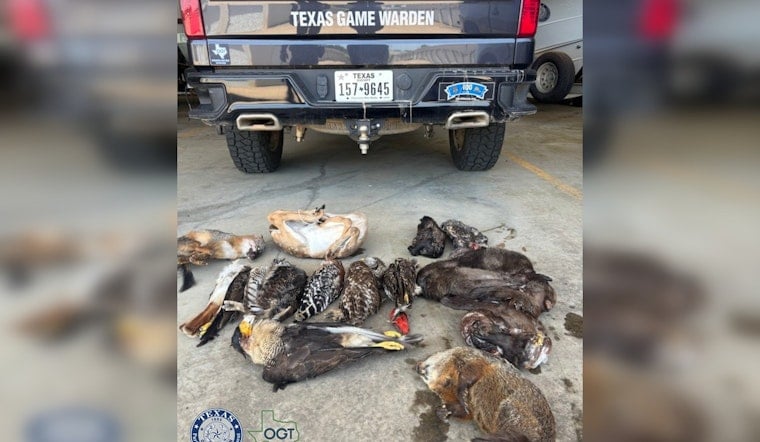
Texas Game Wardens say an Austin resident is facing a stack of wildlife charges after officers opened home freezers during a consent search and found protected birds and other animal parts tucked inside. The person has been cited on multiple counts, including unlawful possession of bird parts, an alligator violation tied to not having a hunting license, a hunter safety regulation violation, and having certain white-tailed deer parts without a required wildlife resource document. Wardens say they will also pursue civil restitution in the case.
The individual was charged with multiple violations including: unlawfully possess bird parts; alligator-no hunting license; hunter safety regulation violation; possess certain parts of white-tailed deer without a wildlife resource document. Civil restitution will be sought in the case.
— Texas Game Wardens (X)
What wardens say they found
According to Texas Game Wardens, officers searched the home with consent and discovered several protected bird species stored in freezers. The list reported by wardens includes a crested caracara, a red-tailed hawk, two red-shouldered hawks, two great horned owls and a northern cardinal. The individual was then charged on multiple counts tied to unlawful possession of those birds, an alligator hunting license violation, a hunter safety infraction and possession of white-tailed deer parts without the proper wildlife resource document. Wardens say civil restitution will be sought to recover both the assessed value of the wildlife and the costs tied to the investigation.
Charges and penalties under state rules
Texas law makes it illegal to possess many game animals or their parts without the right tags or paperwork, and violations can come with criminal penalties as well as civil restitution, according to the Texas Parks and Wildlife Department. Civil restitution is designed to reimburse the state for the value of the wildlife that was taken or held illegally, along with enforcement expenses, and unpaid restitution can affect a person’s licenses and other administrative privileges. Exactly which statutes prosecutors choose to file will determine whether the counts are treated as misdemeanors or felonies and what range of fines or possible jail time could be on the table.
How the case could move forward
Game wardens have authority to seize wildlife and related items when there is probable cause that animals were taken or possessed illegally, and Texas law spells out how seized animals such as alligators must be handled, according to the Texas Parks and Wildlife Code. Court records in this case are expected to show how the charges are formally filed and whether civil restitution is requested as part of those proceedings. Local prosecutors will ultimately decide whether to add more counts, negotiate a plea agreement or take the case to trial.
How to report suspected wildlife crimes
For people who suspect illegal hunting or wildlife trafficking, Texas Parks and Wildlife lists contact information for game warden tips on its connect page, including the Operation Game Thief hotline, according to the Texas Parks and Wildlife Department. Wardens say community tips often play a key role in cases like this. Investigators also caution that handling or removing protected birds can be both illegal and risky for people and animals, so they urge the public to call authorities instead of trying to intervene on their own.





