

























































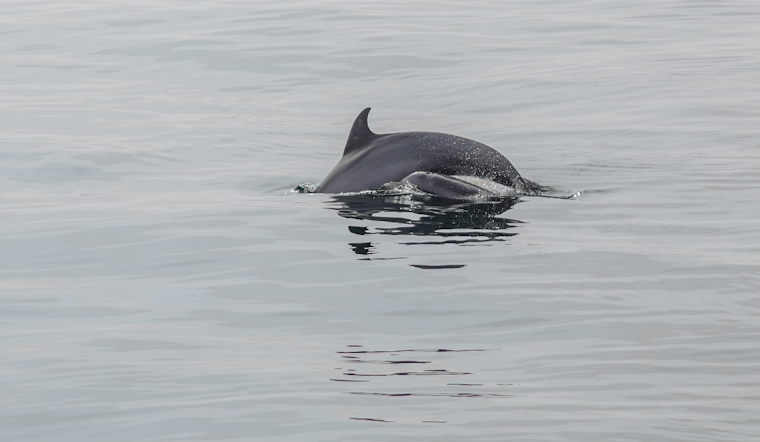
A newborn bottlenose dolphin calf was badly injured after a speeding boat reportedly tore through a pod on Monday in the Barge Canal between the Indian River and the Banana River near Merritt Island. The tiny calf, one of two newborns seen with their mothers, was later observed with a large flap of flesh hanging off the left side of its dorsal fin. On Tuesday, rescue teams and wildlife officers were back on the water, canvassing the canal and urging boaters and waterfront residents to stay sharp and report any sightings.
How the strike was reported
Tour-boat captain Dagan Alexander said he had been showing a family the pod when a second vessel "plowed right over them" and kept going. He told reporters he immediately contacted the Florida Fish and Wildlife Conservation Commission, according to WKMG ClickOrlando. Alexander described the smaller of the two calves as having a large flap of flesh hanging near its dorsal fin. He said an FWC officer arrived on scene within minutes.
Who’s searching
SeaWorld told News 6 that its partners at the Hubbs-SeaWorld Research Institute searched the area but had not yet relocated the injured calf, per reporting by WKMG ClickOrlando. The Hubbs-SeaWorld Research Institute runs a Florida marine mammal stranding and rescue program that covers much of the east coast and works with state and federal agencies on rescues and rehabilitation, according to the institute’s website. Local tour operators and rescuers said they were working shallow canals and inlets where mother-calf pairs are commonly found.
How to report sightings
Anyone who spots the calf is asked to contact the Florida Fish and Wildlife Conservation Commission’s Wildlife Alert Hotline at 888-404-FWCC (3922) or submit a tip online, the FWC notes. NOAA Fisheries also directs the public to its official reporting page for stranded or injured marine animals so trained responders can evaluate the situation and, if needed, intervene. When reporting, officials ask people to share a precise location, describe the animal’s behavior and note any visible injuries.
Why vessel strikes are dangerous
Vessel collisions can cause blunt-force trauma and deep propeller cuts that may be immediately life-threatening or lead to deadly infections, and scientific reviews show that many marine species, including dolphins, are affected by strikes. Global analyses also find that the likelihood and severity of injury generally rise with vessel speed, which makes fast runs through shallow estuaries and narrow canals especially risky for calves and their mothers. Those findings are part of why responders keep stressing extra caution around mother-calf groups.
What boaters can do
NOAA Fisheries recommends giving dolphins at least 50 yards of space, avoiding chasing or circling pods, and slowing down in areas where calves may be present to lower the chance of a strike. Local rescuers and tour operators say dialing back the throttle and staying alert in tight waterways are the quickest, simplest steps boaters can take to reduce risk and help keep young animals alive.





.jpg)