

























































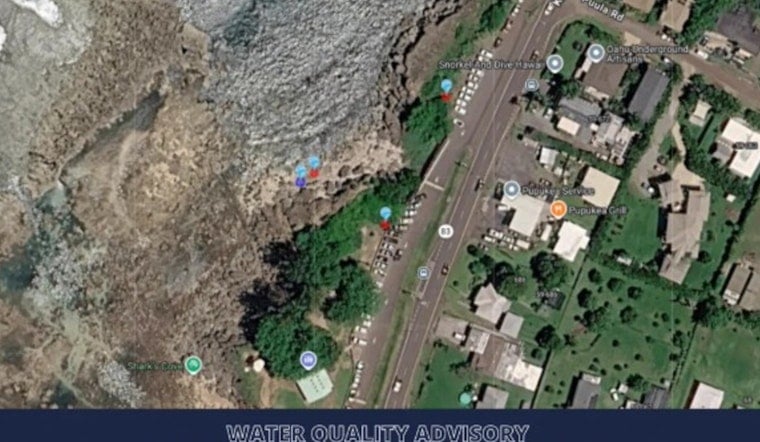
The Hawaiʻi Department of Health sounded the alarm Saturday for Sharks Cove, the hugely popular snorkeling tidepools at Pūpūkea on Oʻahu’s North Shore, after water samples tested above safe levels for enterococci bacteria. Health officials are urging beachgoers to stay out of the water, warning that the exceedance could raise the risk of gastrointestinal and skin illnesses. The advisory covers the Sharks Cove monitoring station and will stay in effect until follow-up tests show bacteria levels are back within acceptable limits, so for now swimmers are asked to treat the cove’s pools as potentially contaminated.
In a post on X, the Hawaiʻi State Department of Health said the Sharks Cove (Snorkeling Spot) monitoring station was flagged early Saturday, with full event details published on its online Clean Water Branch viewer. The department’s alert reminded residents and visitors alike that “swimming at beaches with pollution in the water may make you ill.”
Enterococci are a fecal-indicator bacterium that signal possible sewage or runoff contamination. The Environmental Protection Agency recommends a Beach Action Value of 130 enterococci per 100 milliliters as the point where agencies should trigger public health alerts. Recent Hawaiʻi water-quality reporting from the Surfrider Foundation has repeatedly flagged sheltered tidepools and stream mouths on the North Shore as trouble spots, especially after heavy rain or when upstream pollution sticks around. When test results jump past the Beach Action Value, agencies post advisories and typically resample while they wait for follow-up numbers.
Why Sharks Cove Is Vulnerable
Sharks Cove sits inside the Pūpūkea Marine Life Conservation District, a maze of shallow tidepools and tight reef walls that tend to trap runoff instead of flushing it out with the open-ocean current. The Division of Aquatic Resources notes both the area’s pocketed geology and its heavy use by snorkelers and divers. Local trackers such as Safe to Swim Hawaii caution that these enclosed pools can concentrate bacteria from stormwater, failing septic systems, and other upstream sources, meaning crystal-clear water can still be anything but clean.
What Swimmers Should Do
Public health guidance advises people to avoid getting in the water at any beach under an advisory and to wait at least 48 to 72 hours after heavy rain before heading back in, a simple buffer that helps reduce exposure to storm-driven contamination, according to community monitoring groups such as Safe to Swim Hawaii. Officials also recommend rinsing off with fresh water after any ocean contact, keeping cuts and sores covered, and seeking medical care if vomiting, diarrhea, fever, or stubborn ear or skin infections show up after exposure. For the latest sampling results and official advisories, check the Hawaiʻi Department of Health Clean Water Branch viewer or trusted community trackers such as Safe to Swim Hawaii.



