

























































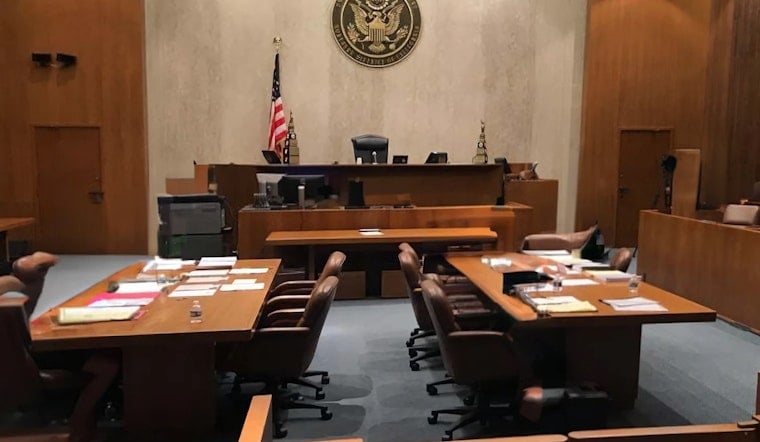
A Fremont man who admitted stealing rare Chinese manuscripts from UCLA’s library system is set to learn his fate Wednesday in federal court. Prosecutors say 38-year-old Jeffrey Ying pulled off an old-school library caper with a modern twist, quietly swapping in dummy books for the real thing. He pleaded guilty last October to one federal count of theft of major artwork, a charge usually reserved for high-end art heists, not stacks of library volumes.
The case has rattled campus librarians and pulled in the FBI’s art-crime team, in part because of what was taken. Court filings say Ying admitted to removing multiple East Asian manuscripts from UCLA between December 2024 and July 2025, including a historical Chinese manuscript believed to date to 1685, along with other rare volumes. Sentencing is scheduled for Wednesday, July 8, according to MyNewsLA.
According to prosecutors, the missing manuscripts are valued at nearly $216,000. Court papers say Ying would check out restricted items, take them back to the Bay Area for several days at a time, then return fabricated “dummy” books that looked the part from the outside but were essentially worthless. When agents later searched a Brentwood hotel room tied to the case, they reported finding blank manuscripts, paperwork that resembled the originals, and pre-made asset tags ready to be attached to stand-in volumes. Those details appear in a press release from the U.S. Attorney’s Office.
How investigators say the scheme worked
Court papers say Ying did not just rely on one name or one library card. Investigators allege he used multiple identities, including “Alan Fujimori,” along with bogus library credentials to reach restricted stacks that are usually off limits to casual browsers. Once inside, he allegedly swapped in low-value or blank volumes dressed up with convincing paper labels so the shelves would still appear full.
Prosecutors also say Ying took advantage of the university’s interlibrary-loan pipeline, requesting items from other UC campuses and routing them through UCLA, where he could then check them out and allegedly make the switch. Courthouse News has reported on the aliases, the loan requests and the paper labels investigators say were used to disguise the swaps.
Timeline and what’s next
Federal prosecutors first filed a criminal complaint in August 2025, according to the U.S. Attorney’s Office. Ying later admitted guilt in October, as reported by Nichi Bei News. Hoodline covered the case when charges were first filed last August; see its original charging story. With sentencing now set for this week, a federal judge will decide whether prison time, restitution or other penalties are appropriate.
Why libraries are vulnerable
Unlike regular library books, UCLA’s special-collections materials do not circulate freely. Researchers typically have to reserve items and consult them under supervision, which makes the disappearance of original manuscripts especially disruptive for scholars who may have waited months to see them. UCLA’s library pages note that special collections and interlibrary-loan services operate under stricter handling rules than general stacks and depend heavily on staff oversight and detailed tracking.
Prosecutors say that same interlibrary system appears to have been a pressure point. By allegedly using transfers between campuses to move rare items into UCLA’s orbit, Ying was able to access materials that normally would have stayed in more tightly controlled environments and keep the scheme going for months before anyone realized something was off.
Legal implications
By pleading guilty to theft of major artwork, Ying now faces a federal charge that carries a statutory maximum of 10 years in prison, along with possible restitution to cover the value of stolen items. Sentencing guidelines give the judge room to weigh his criminal history, level of cooperation and the size of the loss in deciding what punishment fits. Legal reporting notes that art and library theft cases often rise or fall on those kinds of factors, and Courthouse News has outlined the charge and potential penalties in its coverage.
It is not yet clear from public filings or news accounts whether all of the missing volumes have been recovered. Coverage has largely centered on the alleged swaps and the federal court proceedings, according to the Los Angeles Times. We will update this story after the judge issues a sentence.



