

























































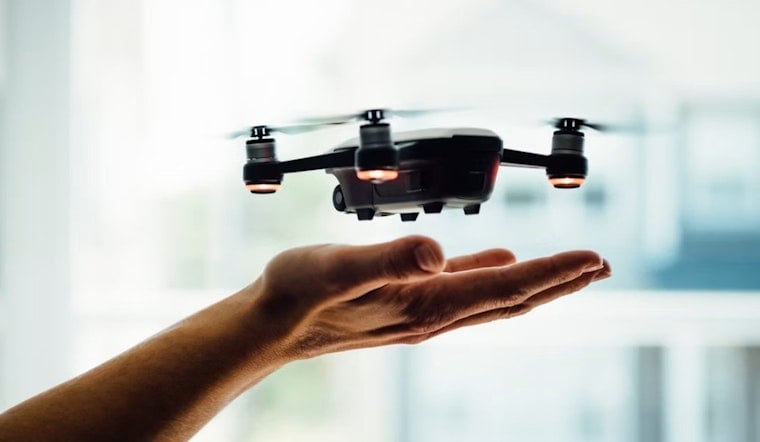
The Cleveland Clinic is getting ready to send prescription drugs over Beachwood by air, rolling out drone deliveries from its administrative campus later this summer. The health system says the program will start small, covering only a narrow set of medications and a tight delivery zone, and patients will be able to opt in at no extra charge. Workers on the Beachwood campus have already been spotted putting together a drone launch pad as the system gears up for flights.
Clinic officials told FOX 8 that the drones have arrived at the Beachwood administrative campus and that crews were assembling a launch pad ahead of the program’s debut later this summer. The pilot will start with patients living within a five‑mile radius and will cover only certain prescription medications. As reported by FOX 8, spokeswoman Bree Robinson said the service will be optional and provided at no additional cost. In an email to Spectrum News 1, the clinic confirmed that the initial rollout will be limited to patients near the Beachwood Administrative Campus.
Zipline Partnership: How the Drone Drop-Off Works
The Cleveland Clinic’s plan to use Zipline’s Platform 2 drones, first announced in 2023, calls for fixed‑wing aircraft that can complete quick, precise deliveries from campus docks and loading portals directly to patient homes. Once a prescription is loaded, a drone flies autonomously to the delivery address and lowers a small delivery droid to the doorstep, then docks and returns to base. According to the Cleveland Clinic Newsroom, the system includes multiple safety layers, and hospital officials say it will initially be used for specialty and rush medications.
Regulatory And Safety Checks
Before routine drone deliveries can become business as usual, programs have to clear aviation and environmental hurdles, including Federal Aviation Administration processes for beyond‑visual‑line‑of‑sight flights and reviews of routes and noise impacts. Experts say Part 135 certification and programmatic environmental assessments are key to scaling operations, and operators must also build in identity verification, tamper‑evident packaging and exception handling for weather and routing problems. The rules of the road, or in this case the sky, are still evolving and vary by state, so local pilots are often tightly limited while agencies complete reviews, according to Pharmacy Times.
Part Of A Bigger Health Care Drone Push
Zipline and other drone companies are already working with several major health systems, and the Cleveland Clinic pilot is joining a national wave of tests and small rollouts aimed at speeding up delivery of specialty medications. Mayo Clinic, Memorial Hermann and other systems have announced Zipline partnerships or pilots in recent years as hospitals look for ways to speed access and support hospital‑at‑home models, as reported by Fierce Healthcare. With that list growing, Cleveland’s experiment will be watched closely as a real‑world test of how drone logistics fit into everyday pharmacy operations.
What Patients Should Know
Patients in the immediate Beachwood area who qualify will be offered drone delivery as an option at no extra cost, clinic officials have told local reporters. Spectrum News 1 reported that the program is optional and will start with a small group of patients, and FOX 8 says drones and launch infrastructure are arriving on campus in the coming weeks. Patients with questions are being directed to contact their Cleveland Clinic pharmacy for details on eligibility and timing.
Clinic officials say the system will expand over time if the pilot proves reliable, with the potential to add lab samples, medical supplies, and hospital‑at‑home deliveries in later phases. The Cleveland Clinic has said it will share more information as flights begin and workflows are finalized, and its earlier post in the Cleveland Clinic Newsroom lays out the plans and safety features for the program. According to that newsroom overview, the rollout is staged to test use cases and compliance before any broader expansion.



