

























































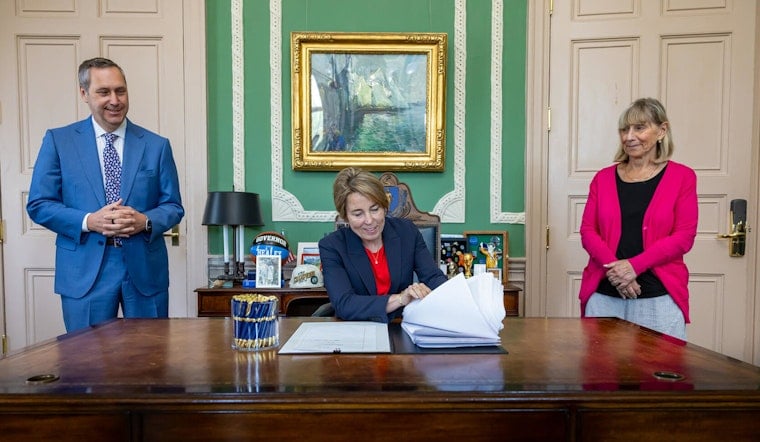
Beacon Hill is getting out the checkbook again, with legislation filed Wednesday that would tack another $100 million onto Massachusetts school funding in a focused push to keep teachers, paraprofessionals, and school-based mental health counselors from leaving classrooms. The plan would deliver a one-time cash boost to districts dealing with tight budgets and rising demand for student supports, on top of the new fiscal 2027 school aid package Governor Maura Healey signed last week. State officials say the extra money would be covered by projected, unbudgeted collections from the Fair Share surtax.
As reported by WHDH, the Healey administration says the $100 million "would aim to retain teachers, paraprofessionals, and mental health counselors." The outlet quotes Governor Maura Healey calling the proposal an "extra boost" for local districts and noting she is "proud to have more than doubled school funding since taking office."
Where the money would come from
The new bill would pull from projected, unbudgeted Fair Share surtax revenues in fiscal year 2027, essentially topping off what officials have already billed as record local aid in the broader FY27 spending plan. As detailed by Mass.gov, Governor Healey signed the FY27 budget on July 9, describing it as a balanced blueprint to lower costs and strengthen schools. Budget documents also show sizable Fair Share resources earmarked for education and transportation in FY27, according to the Massachusetts Legislature.
What's in the proposal
The administration has been clear about who it wants to help but far less specific about exactly how the money would flow. Officials have not yet released a formula that spells out how districts would receive the $100 million if the bill gets through Beacon Hill, as reported by WHDH. That lack of detail leaves open whether the dollars would show up as salary boosts, retention bonuses, competitive grants, or new reimbursements routed through the Department of Elementary and Secondary Education.
Why now
State and district leaders are pitching the timing as a response to a stubborn staffing crunch. Many districts have leaned on paraprofessional-to-teacher pipelines and emergency licensure to keep classrooms staffed, even as demand for school-based mental health supports continues to climb. Recent job-embedded licensure pathways for paraprofessionals and evaluations of emergency-licensure policies underscore why targeted retention funding is politically urgent, according to Bay Path University and the Wheelock Educational Policy Center.
What happens next
The bill now heads into the usual State House gauntlet, where House and Senate committees will weigh the request alongside other FY27 priorities and final decisions on Fair Share allocations. If lawmakers approve language that appropriates the money, follow-up regulations or guidance will decide whether districts can tap the funds quickly for staffing or whether the cash gets folded into longer-term retention efforts.
Superintendents, unions, and parent groups are expected to scrutinize the fine print, since timing, eligibility, and allowable uses will ultimately determine whether the $100 million actually eases hiring pressures and expands school mental health capacity across Massachusetts.





