

























































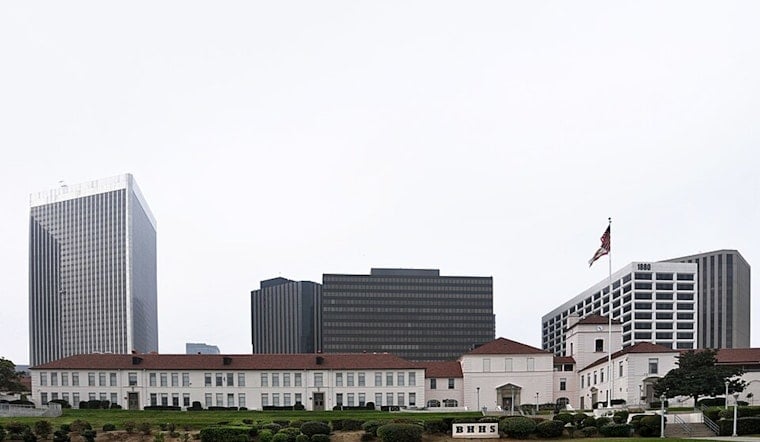
The legal fallout from a student news broadcast at Beverly Hills High School is not going away anytime soon. A Los Angeles County Superior Court judge has refused to toss former Beverly Hills Unified School District safety chief Mark Mead’s defamation lawsuit, keeping alive a bitter dispute over a campus confrontation, a viral video and claims that a teacher helped spread a false story that Mead choked a student.
The case stems from a November 2024 incident on campus, when Mead was accused on a student-run KBEV broadcast of choking a student during a post-election demonstration. The ruling does not say whether that allegation is true or false. Instead, the judge found the case clears California’s anti-SLAPP hurdle, which means the parties will now fight it out in regular civil litigation rather than seeing the suit killed early.
On June 24, Los Angeles County Superior Court Judge Michael E. Whitaker denied an anti-SLAPP motion filed by former Beverly Hills High School journalism teacher Romeo Carey, according to Beverly Press. Whitaker concluded that Mead had shown, at this early stage, that his claims have at least "minimal merit," allowing causes of action for defamation, negligence, intentional infliction of emotional distress and related Labor Code violations to proceed. That decision keeps the case alive for discovery and a full-blown merits review instead of an early dismissal under the state’s anti-SLAPP statute, which is designed to protect free speech from frivolous lawsuits.
Judge zeroed in on competing videos
In explaining his ruling, Whitaker focused heavily on the video evidence. He compared the KBEV broadcast with district security footage and noted that the student video "appears to be slowed down and probably altered," while the security camera shows Mead using "open hands" to push students away, with any contact lasting only "a second or two," according to Hadsell Stormer.
The judge also found there was evidence suggesting Carey likely had personal involvement in publishing the allegedly defamatory video and related student news story. That undercut Carey’s argument that he was simply too far removed from the editorial decisions to be held liable. It also proved crucial in denying his bid for attorney fees under the anti-SLAPP statute, which often allows successful defendants to recover their legal costs.
Mead says transfer and $66,000 pay cut felt like a demotion
Mead filed his complaint in November 2025, naming Carey, the Beverly Hills Unified School District and several current and former district officials. He alleges the KBEV reports were "doctored" and that the fallout led to his reassignment and a roughly $66,000 annual pay cut, Beverly Press reported.
An independent investigation commissioned by the district concluded the assault allegations were not substantiated. Mead has said the finding was framed as "not sustained" and has questioned how video footage from the incident was edited and shared. According to Beverly Press, the paper requested the district security video under the California Public Records Act and received a heavily blurred version, which left the KBEV broadcast as the clearest publicly available account of what happened on campus that day.
What the ruling actually does
Because the defamation claim survived the anti-SLAPP motion, the court allowed Mead’s related negligence, intentional-infliction-of-emotional-distress and Labor Code claims to move forward as well, keeping the entire case intact, according to Hadsell Stormer. That means both sides will now head into discovery, where documents, videos and witness testimony can be subpoenaed and scrutinized, and the court will eventually conduct a deeper merits review.
Mead’s attorney, Morgan Ricketts, called the ruling "an important vindication for Mark" and said the legal team was grateful the court allowed the suit to continue. The judge’s decision does not resolve who is right or wrong and it does not decide any damages. Those questions, and the underlying choke allegation that set Beverly Hills High buzzing, will be tackled later in the litigation.




