

























































Boston lung specialists say a harsh stigma around lung cancer, the idea that people “brought it on themselves” by smoking, is quietly steering patients away from life‑saving screening, follow‑up care and emotional support. Clinicians report that shame piles on top of late detection, worsens outcomes and can deepen mental health crises. In exam rooms, some doctors say patients hide diagnoses or refuse tests rather than risk being blamed.
Pulmonologist Dr. Jenna Gibilaro told Boston 25 News, “Patients are really cruel to themselves, and they’ve been treated cruelly by people who love them.” She said only “five to seven percent” of eligible people get screened and that roughly 40 percent of patients with a concerning screen decline further evaluation.
How Deadly the Disease Remains
Lung cancer is still the deadliest cancer out there. The American Cancer Society reports that it accounts for about one in five cancer deaths and kills more people than colon, breast and prostate cancers combined. The Centers for Disease Control and Prevention notes that tobacco use causes nearly nine in ten lung cancer deaths in the United States, a reality that often feeds the shame many patients describe.
Stigma and Suicide Risk
Research has found that people diagnosed with lung cancer face a sharply elevated risk of suicide, roughly three times the rate seen in the general population, especially in the months right after diagnosis, according to a systematic review and meta‑analysis published on PubMed Central. Large U.S. registry analyses reach similar conclusions and highlight clinical and social factors that raise risk among people with lung cancer on PubMed Central.
Screening Rules and the Coverage Gap
The U.S. Preventive Services Task Force recommends annual low‑dose CT screening for adults 50 to 80 who have at least a 20 pack‑year smoking history. Medicare updated its coverage in 2022 to follow a lower starting age for eligible beneficiaries, but those changes still leave many high‑risk people younger than 50 without routine coverage. Details are laid out by the U.S. Preventive Services Task Force and in Medicare guidance.
Low Uptake and Second‑Best Tests
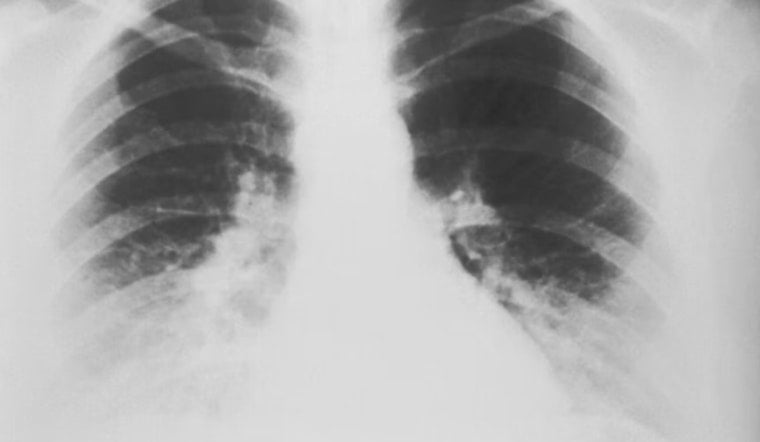
Even where low‑dose CT screening is recommended, relatively few people use it. State and national studies show only a small percentage of eligible Americans get screened each year. Public health researchers point to awareness, access and stigma as key barriers. Some clinicians also say they resort to ordering chest X‑rays for younger patients because insurers will pay for those, but not low‑dose CT scans, a workaround Dr. Gibilaro described in her interview with Boston 25 News.
The problem, specialists note, is that chest X‑rays provide planar, two‑dimensional images and are far less sensitive than low‑dose CT, which reconstructs cross‑sectional slices into volumetric 3‑D views (PubMed Central; chest X‑ray information from RadiologyInfo and chest CT details from RadiologyInfo).
Why Early Detection and New Drugs Matter
Treatment options for some patients have expanded in recent years. In selected people with surgically resected, EGFR‑mutated non‑small‑cell lung cancer, adjuvant osimertinib was associated with about a 50 percent reduction in the risk of death in the ADAURA trial, a result many oncologists described as practice‑changing in The New England Journal of Medicine. That improvement applies to tumors with EGFR mutations, a biologic subset whose prevalence varies by region and population, according to a review on PubMed Central.
Clinicians say the real antidote to the harm they are seeing is less blame and more screening, support and straightforward referral into treatment. If you or someone you know is in crisis or needs immediate emotional support, call or text 988 or visit the 988 Lifeline for confidential crisis counseling and resources.



