

























































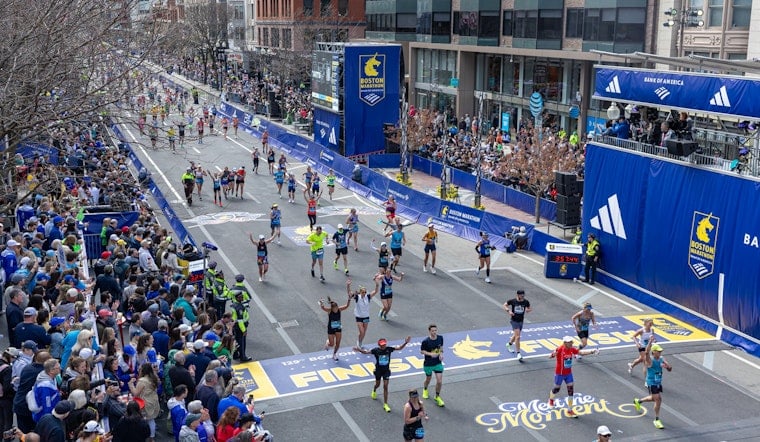
For thousands of runners who hit a Boston Qualifying time but still got shut out, the Boston Marathon is finally adding something other than speed to the equation: luck.
The Boston Athletic Association is introducing a random-selection component for the 2027 Boston Marathon, creating roughly 1,000 lottery spots for athletes who ran a BQ but missed the traditional cutoff. The tweak lands after years in which the race tightened its entry standards so much that even strong qualifiers were left watching from home.
What Is Changing For Qualifiers
In a registration update from the B.A.A., the organization said that qualifier registration for the 131st Boston Marathon will run from September 14 to 18, 2026, on its Athletes' Village platform. Once registration closes, officials will verify submitted times, accept the fastest qualifiers to establish the cutoff, then randomly select about 1,000 additional qualifiers who fell on the wrong side of that line. Applicants will hear by early October 2026 whether they are in or out.
The notice also confirms that the 2027 registration will include time-index adjustments for qualifying marks earned on courses with a net elevation drop greater than 1,500 feet, an effort to level the playing field for runners who chose flatter or more downhill routes.
How Tight The Squeeze Has Become
The backlog of qualified but rejected runners has been huge. For the 2026 race, the B.A.A. received 33,249 qualifying applications and accepted 24,362, which meant 8,887 qualifiers were turned away, according to Runner's World. To actually make the field that year, athletes had to run 4 minutes and 34 seconds faster than their published qualifying standard.
Why The B.A.A. Is Adding A Lottery
Jack Fleming, the B.A.A.'s president and CEO, told The Boston Globe that the Boston Qualifier Selection is meant to "offer hope" to athletes who met the standard but missed the cutoff. He emphasized that the number of qualifiers accepted by time will remain in line with recent years, so the race will still primarily reward speed.
Fleming also pointed to the realities of the point-to-point course, which snakes through small towns west of Boston. The B.A.A. worked with crowd scientists ahead of the 2026 event to improve race-day flow, and officials say there is only so much room to expand before things get too cramped for comfort.
How The New Selection Will Work
Under the updated system, the fastest qualifiers in each age group will still be taken first, using the familiar ranking process that determines the annual cutoff. That cutoff will be set exactly as before.
Anyone whose qualifying time lands behind that cutoff will then be automatically entered into the Boston Qualifier Selection lottery. The odds of being picked will depend on how many qualifiers apply during registration week, and the B.A.A. is already signaling that field-size limits mean not every lottery-eligible runner will get the nod.
Debate Over Fairness
Some runners argue the B.A.A. could simply extend invitations to the next 1,000 fastest qualifiers and call it a day, instead of leaving things up to chance. The association, however, maintains that a random draw protects the symbolic weight of a BQ time while giving every qualifier who hit the standard a shot at Boston, as reported by The Boston Globe.
That tradeoff, essentially choosing between rewarding every extra second of speed or spreading opportunity equally among all qualifiers, is likely to fuel plenty of pre-registration debate.
What Runners Need To Know Now
Registration will not be first come, first served, so there is no advantage to rushing the application as long as it is submitted during the September 14 to 18 window. The B.A.A. will apply downhill time-index adjustments to qualifying races with a net elevation drop of 1,500 feet or more, in line with its current notice.
The 131st Boston Marathon is set for April 19, 2027, and by early October 2026, applicants will know whether they earned a bib through sheer speed, a lucky draw, or not at all.





