

























































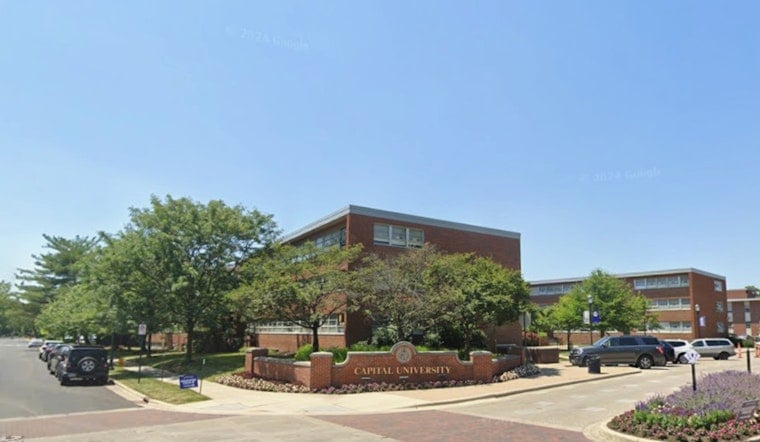
Capital University is putting a major question mark over one of Bexley’s most recognizable corners: whether Renner Hall should give way to a future academic building. The idea is part of a new 2031 strategic plan from President Jared Tice, but it remains a planning concept rather than a construction announcement.
In yesterday's report, Columbus Business First said Tice introduced a plan spanning the campus, personnel, philanthropy, academics and student life, and community impact. The campus proposal is the splashiest piece: Renner Hall could be demolished to make room for a future academic building at the university’s Main Street-facing edge.
Renner Hall Is More Than A Blank Canvas
Capital’s campus facilities page lists Renner Hall among the university’s teaching and learning spaces, with academic uses that include an eye-tracking laboratory and writing computer lab. Replacing the building would therefore be a significant campus change, not simply a cosmetic makeover at the entrance.
The question of what to do with Renner Hall has been floating around Capital for years. The student newspaper The Chimes reported in 2015 that the university expected to raze the building after major renovations, with the corner then envisioned as green space. The newer plan appears to reopen that conversation while pointing toward academic construction instead.
The Bexley Impact Could Extend Beyond Campus
The redevelopment idea arrives as Capital prepares to carry out its broader Capital Rising strategy. In a July 8 announcement, Capital University said the plan is intended to guide the institution into its third century and emphasized long-term sustainability, student success and strategic leadership.
For Bexley, any major change at Main Street and College Avenue would be felt beyond the campus boundary. The City of Bexley says its Southwest Bexley Strategic Framework includes recommendations for improving the relationship among Capital University, Trinity Lutheran Seminary and surrounding neighborhoods.
Several practical questions remain open, including what the proposed building would house, how large it could be, how it would be financed and when demolition or construction might begin. For now, the university is signaling that one of Bexley’s most visible academic sites could become a centerpiece of its next five years.





