

























































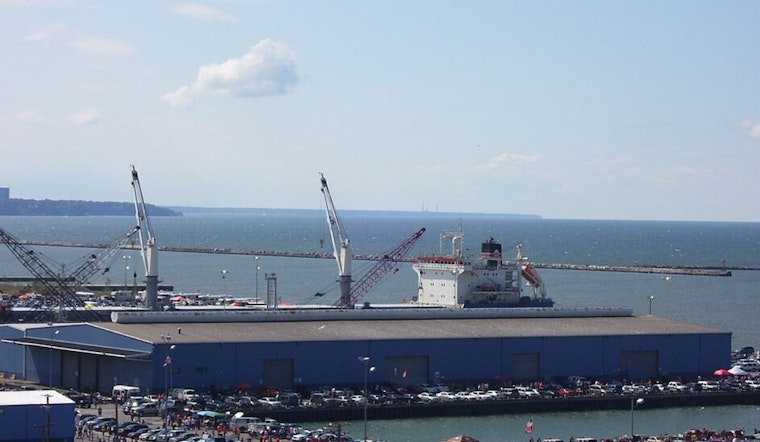
Cleveland could soon get a new way to move commercial freight into Canada: a proposed Lake Erie truck ferry that would carry trailers between the city and Wheatley, Ontario, in roughly two to three hours. The Port of Cleveland and Milo Harbour Inc. are advancing the plan with a possible launch in early 2028.
The two sides have signed a memorandum of understanding to pursue the service, according to Cleveland.com. The current proposal is focused exclusively on commercial freight, not passengers or personal vehicles, and partners estimate it could eventually handle as many as 300 round-trip truckloads per day.
A Lake Erie Route Around Detroit
The proposed ferry would connect Cleveland with Wheatley, a community on Ontario’s Lake Erie shoreline about 15 minutes south of Highway 401. Once freight reaches Cleveland, it could move onto the port’s highway and rail connections serving Midwest and East Coast markets.
The concept would add another piece to a port operation that already handles roughly 13 million tons of cargo each year and supports about 23,000 jobs, according to the Port of Cleveland. Hoodline previously reported on the port’s economic footprint, including about $7.07 billion in annual activity tied to its operations.
Timing Follows Gordie Howe Bridge Opening
The announcement arrived two days after the Gordie Howe International Bridge opened between Detroit and Windsor, Ontario, creating a fresh backdrop for any proposal aimed at moving cross-border freight. The new bridge officially opened to traffic on July 27, according to the Gordie Howe International Bridge authority.
Port officials say the ferry would complement—not replace—truck and rail transportation, giving Ohio exporters a more direct route into Canada while offering shippers an alternative to the Detroit-Windsor crossing. The port’s chief operating officer, Dave Gutheil, said the project would further establish Cleveland as a Great Lakes maritime trade leader.
The idea has been taking shape for weeks. The Lobby Monitor reported in June that Milo Harbour had registered to lobby federally about building a barge port to move cargo across Lake Erie.
Before the service can move from memorandum to manifest, the partners must acquire or commission a suitable barge and settle whether the operation will be publicly or privately run. For now, the early-2028 target remains a goal rather than a sailing schedule—but Cleveland’s waterfront is once again eyeing Canada as a potential next stop for Northeast Ohio freight.





