

























































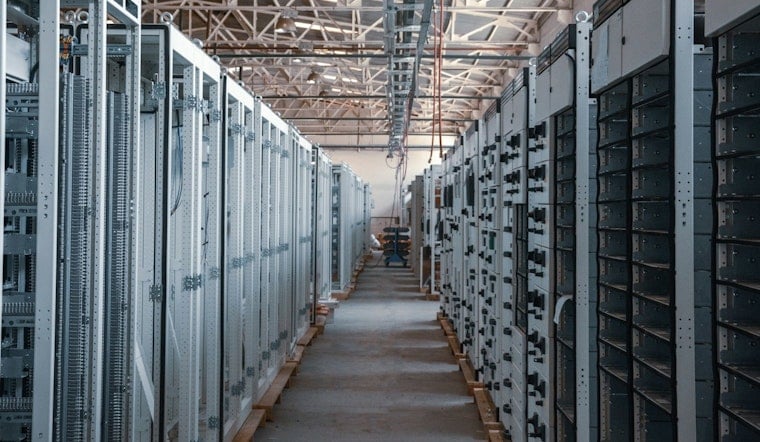
Empery Digital is steering away from its bitcoin-treasury image and into the guts-and-wires side of tech, putting $65 million into a Midwest industrial site that it says will become a high-density AI data center. Under the deal structure, Empery plans to take roughly a 25% stake in a new acquisition vehicle, while an affiliate of Hunt Properties will run the project and oversee the site’s existing electrical backbone. Company materials say the facility currently supports about 150 megawatts of power, with an upgrade path to nearly 300 MW for AI and high-performance computing workloads.
According to a press release on Business Wire, Empery’s investment represents a 25% interest in a newly formed acquisition entity. An affiliate of Hunt Properties has signed a non-binding letter of intent for a triple-net lease with a leading compute provider, which the company says could produce as much as $1 billion in net lease payments over time. The partners also plan to chase additional powered land sites that can be converted for AI and other high-performance computing customers. As part of that pivot, Empery will discontinue its bitcoin treasury dashboard, signaling a move away from a pure crypto-treasury storyline.
A Form 8-K filed with the U.S. Securities and Exchange Commission fills in more of the fine print. The partnership has signed a property sale agreement for approximately $230 million. Empery has already made an initial $2.9 million capital contribution, with another $62.1 million committed at closing. The filing states that TexStack, a Cardinal Power affiliate and Hunt Properties subsidiary, will hold 75% of the partnership units and Empery 25%. Closing is targeted for the third quarter of 2026 and is still subject to due diligence and a review period that runs through July 29, 2026. The SEC report also points out that the site includes an owned electrical substation and infrastructure tied to an existing utility agreement, which the company argues should shorten the conversion timeline.
In the company’s announcement, Empery co-CEO Ryan Lane called the move “a very unique opportunity to capitalize on the exploding demand for compute and power.” Hunt chairman Al Allred added that access to “reliable, scalable power infrastructure” is becoming critical as AI growth accelerates. The release also names advisers on the deal, including Clear Street, Ropes & Gray, Lake Street Capital Markets and Davis Polk & Wardwell, and frames the division of labor plainly: Empery brings capital-markets reach, Hunt brings utility interconnection and power-procurement know-how.
Power And The Execution Challenge
Across the industry, developers and operators say power capacity has become the real gatekeeper for industrial-scale AI projects, which makes sites with existing substations and utility hookups significantly more attractive. Data Center Frontier has argued that AI infrastructure has entered an “execution era,” where the headline announcements matter less than the ability to deliver on tight construction and power-delivery timelines. The Uptime Institute’s 2026 outlook similarly flags AI-driven load growth as a stress test for electric grids and warns that major power upgrades are already taking longer to bring online.
What To Watch Next
Third-party coverage by CityBiz tracks the company’s announcement and notes that Empery intends to keep shareholders updated through its public disclosures as the project advances. Near term, the key checkpoints are completion of due diligence, any move to convert the current letter of intent into a definitive triple-net lease, and the utility interconnection schedule that will dictate how fast the site can ramp to its upgraded capacity. If those pieces fall into place, the property could shift from a conventional industrial facility into one of the region’s larger AI-capacity hubs on a relatively brisk timeline.
Legal And Financial Notes
The SEC filing also spells out governance and funding mechanics for the joint venture. As managing member, TexStack may require Empery to participate in mandatory capital calls, a contingent obligation that sits in the background for investors reading the fine print. The current letter of intent for the triple-net lease is explicitly non-binding, and the roughly $1 billion of potential lease payments is presented as an estimate that depends on negotiating a final lease and successfully completing the planned power upgrades. Empery’s disclosures emphasize that these are forward-looking expectations and include the usual list of risks that could delay the project or change its economics.
Empery’s $65 million slice is one of several recent bets that powered land in the Midwest, where substations and utility agreements are already in place, will reach the AI market faster than greenfield builds that start from scratch. For now, the dates to circle are the end of the July review period and any subsequent filings or lease announcements that lock in a tenant and firm up the project’s numbers. Those steps would effectively turn a glossy announcement into a binding contract. If the upgrade work and lease both go through as planned, the site could add hundreds of megawatts of AI capacity to the Midwest grid, provided the power buildout stays on schedule.


