

























































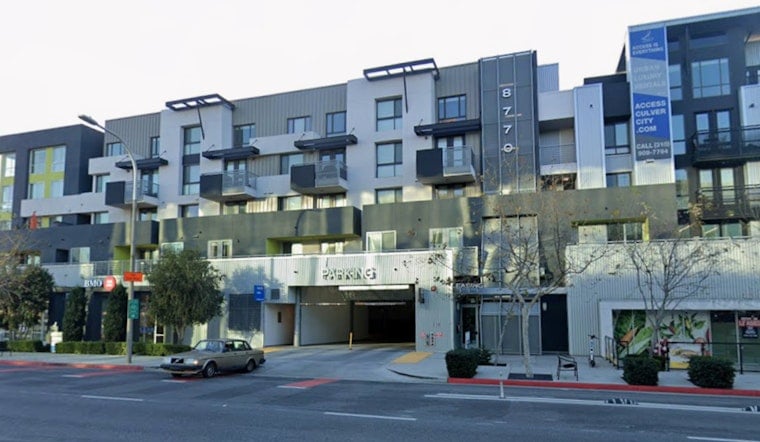
In a splashy summer move that has Westside dealmakers talking, Beverly Hills-based Black Equities Group, led by investor Stanley Black, shelled out about $106 million for Access Culver City, a mixed-use complex on Washington Boulevard. The trade appears to be the largest multifamily sale Culver City has seen so far and is turning heads for the price it puts on transit-adjacent real estate on the Westside. Local brokers say the numbers highlight a renewed appetite for stabilized, income-producing rentals that are close to rail and bus lines and major job centers.
As reported by The Real Deal, Black Equities' purchase includes the 115-unit building at 8770 Washington Boulevard along with about 31,000 square feet of fully leased ground-floor retail. Multi-Housing News previously reported that Greystar developed and opened the project in 2017.
Commercial Observer notes that the $106 million price was allocated at roughly $81 million for the apartments and $25 million for the retail. That split pencils out to about $704,000 per unit on the residential side and close to $805 per square foot for the shops. Newmark represented Greystar in the transaction, according to the coverage.
Policy And Pipeline Are Reshaping Where Capital Flows
Investors have been steering more bids toward cities such as Culver City as Los Angeles' Measure ULA raises the cost of large deals within L.A. city limits, a shift that local reporting links to changing buyer strategies. The Real Deal has tracked Measure ULA's effects on the market, while local data show countywide multifamily sales beginning to rebound even as coastal hubs continue to command a pricing premium.
Mixed-Use Math: Retail Skews The Headline Per-Door Number
Market analysts are quick to point out that mixed-use deals like this one require carving out retail income streams from the apartment pricing to understand what buyers are really paying for housing. That nuance is emphasized in industry breakdowns from Atlas Brief and coverage by CoStar, which note that headline per-unit figures can look eye-popping even when underlying residential yield expectations stay more measured.
Numbers from Colliers show average multifamily pricing across greater Los Angeles sitting well below what Black Equities just paid, underscoring the gap between core Westside enclaves and broader county norms. Deal details summarized at Traded list a late-June closing date, and brokers say that investors chasing stabilized, transit-adjacent assets are likely to keep slugging it out for the few trophy mixed-use properties that hit the market.




