

























































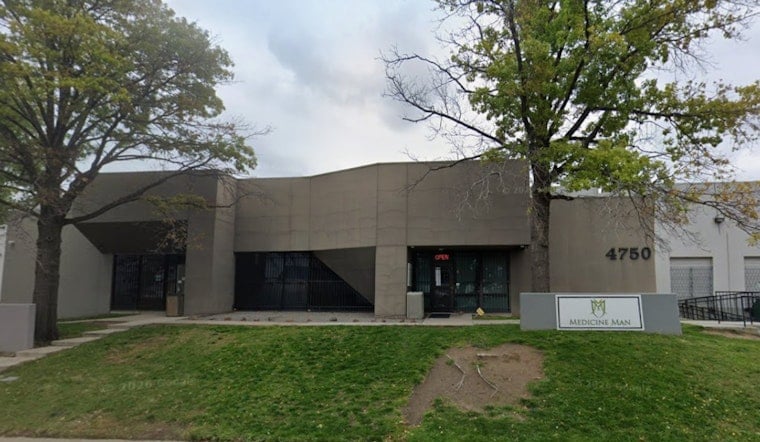
A longtime Denver cannabis grow is going dark, and about 50 workers are losing their jobs as a result.
The Cannabist Company is closing its Medicine Man cultivation site at 4750 Nome St. in Denver and will eliminate roughly 50 jobs, according to a formal separation notice given to employees. Company documents provided to staff say base pay and benefits will continue for the next 60 days and that the separations are permanent, with layoffs scheduled to begin on Sept. 11. The move pulls a veteran indoor grow out of an already crowded Colorado market and lands in the middle of a broader wave of production cuts across the state.
As reported by The Denver Post, a notice from Cannabist’s HR team laid out workers’ separation dates and described the action as permanent. The Post also notes that the Nome Street site traces back to Medicine Man, the local operator Cannabist acquired in 2021.
The Cannabist Co., the multistate operator formerly known as Columbia Care, has been pursuing a court-supervised restructuring this year after initiating proceedings in Canada and seeking recognition of those processes in the U.S., according to filings. Company disclosures and court papers filed in March 2026 detail asset-sale agreements and a broader wind-down plan as the operator works through bankruptcy and divestitures. An SEC filing lays out the sale process and related timelines.
Why growers are folding
State data and industry analysts say the pressure on Colorado cultivators has been building for years, with active cultivation capacity and operator counts shrinking while prices keep sliding. Data published by the Colorado Department of Revenue’s Marijuana Enforcement Division and the state’s licensed-facilities list show notable churn among cultivation licenses, a trend local reporters say has left far fewer active recreational growers than just a few years ago. Colorado Department of Revenue data and market analysis also point to steep wholesale price declines that have eroded margins, and industry coverage notes that wholesale flower prices in Colorado and other mature markets have fallen sharply, undercutting higher-cost indoor and single-site operators. For context on national price compression and its effects, see recent industry analysis from CannIntel.
Other Denver growhouse closures
The Nome Street shutdown follows a string of recent Denver production cuts by other big operators. PharmaCann (LivWell) announced the closure of its production facility near the National Western Complex earlier this spring, which will eliminate more than 100 jobs, according to local reporting. Other operators, including once-large chains tied to Eaze/Green Dragon, have closed or pared back cultivation footprints in recent years, illustrating a broader consolidation in Denver’s cannabis industrial base. Denverite and BusinessDen have tracked several of those closures and the jobs they removed.
Worker notices and the legal picture
Cannabist’s letter to employees, described in reporting and company notices, states that the separations are permanent and that affected staff will receive base pay and benefits for 60 days. Under federal WARN rules, employers that meet coverage thresholds generally must give 60 days’ notice before large plant closings or mass layoffs, and affected workers and state dislocated-worker units are among the parties that must be notified. The Denver Post reviewed the company notice, and the U.S. Department of Labor’s WARN materials explain the baseline notice obligations employers face in mass-layoff scenarios. Guidance from the U.S. Department of Labor is a resource for workers and advocates seeking more information.
For Denver, the immediate impact is on a cluster of cultivation jobs and on a neighborhood that hosts several cannabis industrial properties. For the wider market, it is another signal that price and capacity imbalances are accelerating exits. Expect more local updates as the company completes its separation notices and as the wider restructuring process plays out in court and in state licensing records.





