

























































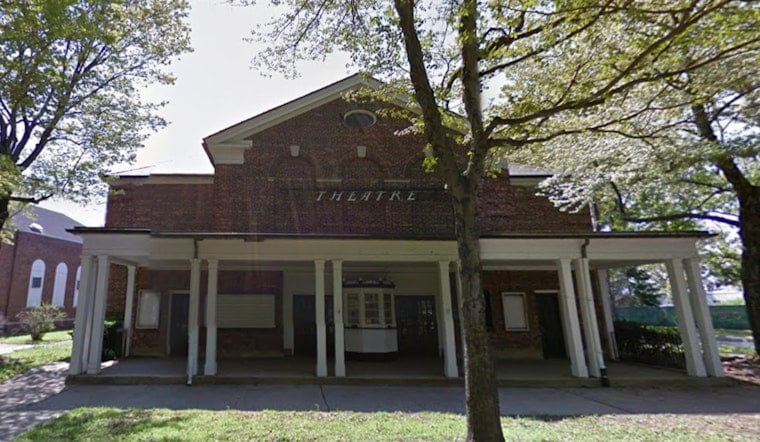
Developers hunting for a marquee historic project may want to book a ferry ride. The Trust for Governors Island has officially invited proposals to breathe new life into two recently restored landmark buildings on the island, including the long-quiet Fort Jay theater. The move is the latest push to turn underused historic structures into cultural, educational or hospitality anchors that could keep the island active far beyond summer weekends.
As reported by Crain's New York Business, the Trust has issued a public request for expressions of interest that asks developers and nonprofits to pitch reuse concepts for two restored properties inside the Governors Island Historic District. One is Building 330, the former War Department theater at Fort Jay, which Crain's notes has already been stabilized and prepped for adaptive reuse.
Building 330 shows up in federal and historic district documents as a two story, roughly 700 seat theater from the late 1930s, with a curved ticket booth, entrance ramps and solid masonry construction. Those same federal RFP packets and historic district files spell out the technical details that preservation minded bidders are expected to study before they start sketching designs. National Park Service records highlight the theater’s defining features along with key preservation limits.
The Trust has for years dangled historic buildings in Nolan Park, Soissons Landing and other corners of the island for adaptive reuse, and it keeps a standing leasing and development portal that lists available space and policy goals. On its real estate pages, the Trust lays out the kinds of tenants it is courting, from cultural and educational operators to hospitality and office users, and sets expectations on lease terms and review timelines for landmark properties. The Trust for Governors Island site is the go to clearinghouse for active solicitations and how to apply.
Backstory and infrastructure
This latest call for ideas rides on the back of years of master planning and infrastructure work that turned Governors Island from a seasonal curiosity into a place where substantial rehabs are actually possible. Earlier public solicitation materials walk through the park master plan and document investments in ferry landings, utilities and seawall improvements that laid the groundwork for redevelopment. Those older RFPs still serve as helpful context for anyone trying to understand how the pieces fit together. National Park Service materials, prepared with the Trust, trace that evolution.
What developers will face
There is a catch, and it is a big one. Most of the island’s legacy structures sit inside overlapping New York City and federal historic districts, which means any exterior or significant interior changes are subject to multiple layers of review. The Trust and preservation agencies will expect proposals that line up with the city Landmarks Preservation Commission standards, and that typically means formal preservation plans, careful documentation and contractors who know how to work on protected buildings. The Landmarks Preservation Commission designation report spells out what must be protected and what might be fair game.
How to follow along
Developers, arts organizations and campus style operators eyeing the island’s historic stock are being steered to sign up for the Trust’s real estate mailing list and to keep an eye on new RFEIs and RFPs for deadlines and submittal rules. The Trust for Governors Island portal, along with the recent item in Crain's, currently offers the clearest public signal that proposals are being sought this month. Any public information sessions or pre proposal building tours are typically posted with each individual solicitation.
Why it matters
Turning the island’s landmark shells back into working buildings would preserve rare historic fabric while also pushing Governors Island toward a fuller year round role in the city’s cultural and educational life. The ongoing Harbor School build out is already nudging the island away from a purely seasonal identity and toward a more permanent campus style mix of uses, and fresh adaptive reuse leases could speed that shift. Harbor School’s topping-out earlier this summer showed how quickly that transformation is moving.



