

























































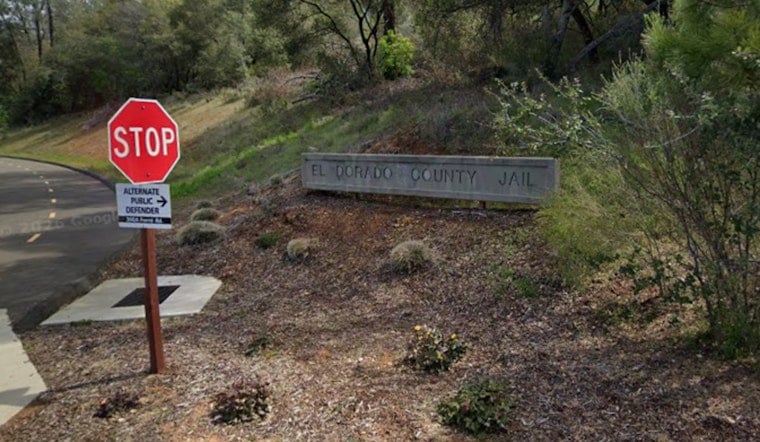
James Daniel Baker is suing El Dorado County, the county jail and a detention staffer, saying he was violently attacked while locked up in Placerville after he told staff he had left a gang. His complaint says the assault left him with a traumatic brain injury, post-traumatic stress, depression and a seizure disorder, and he is seeking unspecified monetary damages. Court records show the suit was filed in federal court in June.
Federal filing and the parties named
According to filings in the U.S. District Court for the Eastern District of California, Baker, identified in the complaint as James Daniel Baker, names El Dorado County, the El Dorado County Jail and an individual identified as McNamara as defendants and brings civil-rights claims under 42 U.S.C. § 1983. The complaint was filed on June 9, 2026, and docket entries show a magistrate judge granted Baker permission to proceed in forma pauperis and set out initial administrative steps. Those details appear on the federal docket maintained by Justia Dockets & Filings.
What the lawsuit says happened
Baker claims he was assaulted at the Placerville facility after he told correctional staff he had left a gang and that officers failed to keep him separated from inmates who later attacked him. The complaint states the beating caused a traumatic brain injury, post-traumatic stress disorder, depression and at least one seizure. Those allegations and Baker's account of his injuries were first reported by The Sacramento Bee.
Staffing shortfalls the grand jury flagged
The lawsuit lands at the same time a civil grand jury is warning that chronic staffing shortages in county detention centers are putting both staff and inmates at risk. In its 2025-2026 "Detention Center" report, the panel found about 21% of positions unfilled at the Placerville jail and roughly 50% vacant at the South Lake Tahoe facility. The report notes that the Placerville expansion will increase staffing needs without adding inmate capacity.
According to the grand jury, the expansion is a roughly 22,000-square-foot addition that will require about 10 more correctional officers and two sergeants. The panel recommended a new compensation study and a targeted recruitment plan to close the gaps, as outlined in findings from the El Dorado County Civil Grand Jury.
Pay and recruitment problems
Pay and recruitment sit at the center of the grand jury's concerns. County officials and jurors say relatively low wages make it hard to staff remote Tahoe posts and leave remaining officers logging heavy overtime. A 2023 compensation review cited in local coverage put the market median monthly pay for comparable agencies near $6,200, compared with about $5,700 for El Dorado County corrections staff, placing the county near the bottom of its peers. Those figures and the broader staffing picture were highlighted in local reporting and in Hoodline's look at overworked guards and empty posts.
County response and what is next
Local reporters say county officials did not immediately answer requests for comment about Baker's lawsuit or the grand jury's staffing warnings, and the sheriff's office had not issued a public statement addressing the complaint. The grand jury set deadlines for formal responses from the sheriff and the Board of Supervisors, and any moves on hiring or pay will be watched closely as the Placerville expansion moves toward completion. Reporting by The Sacramento Bee also noted that officials did not immediately respond to questions about the case.
Legal context
Baker's complaint invokes 42 U.S.C. § 1983 to assert civil-rights violations that fall into the category of Eighth Amendment failure-to-protect claims when they involve inmate safety and supervision. To win on that theory, courts generally require proof that officials were subjectively aware of a substantial risk of serious harm and were deliberately indifferent to that risk, the standard the U.S. Supreme Court set out in Farmer v. Brennan. That framework and the nature of Baker's claim are reflected in federal precedent and in the court docket for his case; see Farmer v. Brennan and the federal docket for context.




