

























































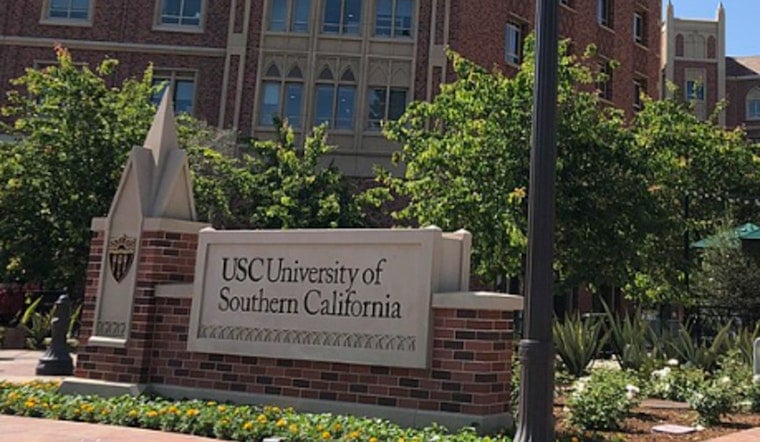
Two of Los Angeles’s best known private universities, the University of Southern California and Loyola Marymount University, are now caught up in a federal civil rights fight after one hosted and the other agreed to host a summer program run by the Hispanic Scholarship Fund that the complaint says limits in person participation to students who identify as Hispanic. The filing asks federal authorities to look closely at whether the campuses’ role in the Youth Leadership Institute crossed the legal line into race based exclusion.
The complaint, filed June 29, alleges the universities materially supported and promoted the Youth Leadership Institute by providing campus space, speakers and on campus housing, and that those actions denied non Latino students equal access, according to LAmag. The filing asks federal civil rights officials to consider whether Title VI and Title II of the Civil Rights Act apply to the universities’ involvement.
The Youth Leadership Institute is run by the Hispanic Scholarship Fund and is described on HSF's site as a free, highly selective, five day college access program for high achieving high school juniors who identify as Hispanic. HSF lists an LMU session June 24–28 and a USC session July 15–19 on its calendar. LMU has hosted YLI in recent years, and its newsroom has highlighted the partnership as part of the university’s outreach work to help students prepare for college.
What the complaint argues
The Equal Protection Project’s filing contends that by hosting, promoting and providing lodging for YLI, USC and LMU effectively “adopted” the program and therefore became legally responsible for any exclusionary effect it produces, a central theory in the complaint. In published reporting and the EPP’s announcement, William Jacobson, the group's founder, is quoted saying, “That program discriminates on its face and unequivocally on the basis of national origin.”
How the law might apply
Title VI forbids discrimination on the basis of race, color or national origin in programs that receive federal financial assistance and is administered by the U.S. Department of Education’s Office for Civil Rights, while Title II of the Civil Rights Act covers discrimination in public accommodations and is enforced by the U.S. Department of Justice. Both agencies have procedures for reviewing complaints, and accepted matters can lead to document reviews, interviews and resolution agreements that require corrective steps by institutions.
What HSF and the campuses say
HSF’s program page describes YLI as open to students who identify as being of Hispanic heritage and notes that host campuses provide dorm housing, meals and program materials, and LMU’s newsroom presents the relationship as part of its college access work. Those program details are central to the complaint’s theory that institutional support, rather than a purely third party program merely renting space, is what triggers potential legal responsibility.
What to watch
The next steps are expected to be procedural, as federal offices decide whether to open formal investigations. If they do, those probes can take months and may result in voluntary resolution agreements or other remedies. For now, the session listings remain on the program calendar, and the case is likely to be watched closely by campus officials, advocates for college access and legal observers who say it could test how far universities can go in partnering with outside groups that focus on specific racial or ethnic identities.





