

























































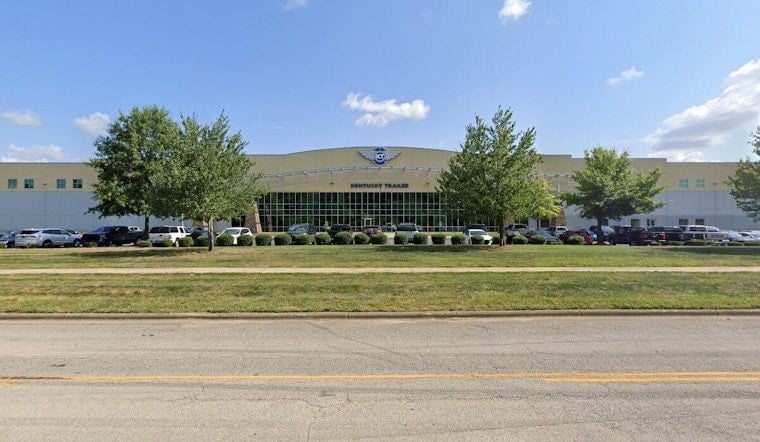
University of Louisville leaders are rolling out a big new piece of their research ambitions: a 70,000-square-foot, $70 million Center for Bioscience at the edge of the Belknap campus. The project would be the first major building in the long-discussed Innovation Park and is slated for the former Kentucky Trailer site behind the J.B. Speed School of Engineering. The center is intended to boost UofL’s laboratory capacity, deepen research partnerships and, if all goes according to plan, help lure private-sector tenants into a new research district anchored by federal construction funds.
The plan in brief
University officials are pitching the Center for Bioscience as the initial anchor for the research park, with dedicated lab and office space for UofL investigators and outside collaborators. As reported by Louisville Business First, the school released early renderings along with the 70,000-square-foot building estimate. That account describes the project as the first visible phase of UofL’s Innovation Park vision finally moving from planning documents to bricks and mortar.
Where it will sit
The proposed site is the former Kentucky Trailer and Drop Forge parcel on UofL’s Belknap campus behind the Speed School; public reporting identifies that property as within the Innovation Park footprint, but we did not find a university building inventory entry or the specific 2601 South Third Street address in the supplied sources. Placing the Center for Bioscience beside existing engineering facilities is intended to set up cross-disciplinary collaborations that do not require a long walk across campus. According to the Jefferson County Property Valuation Administrator's online parcel search, there were no matching documents for '2601 South 3rd Street'.
Federal funding
Congressional appropriators carved out a $70 million National Institute of Standards and Technology construction designation for a Center for Bioscience at UofL in the fiscal 2026 spending package. The Congressional Record lists the University of Louisville in the NIST construction accounts, formally steering that money to the project. University officials are treating that federal designation as the core funding anchor as they move into design, procurement and, eventually, construction.
UofL reaction and research priorities
Campus leaders are publicly celebrating the earmark as a significant boost for UofL’s research profile. In a university press release, UofL President Gerry Bradley offered remarks thanking federal support and said the center would strengthen work in fast‑growing research areas. The statement casts the project as a tool for turning university research into treatments, technologies and commercial partnerships instead of letting promising ideas stall in the lab.
Design, timeline and procurement
On the federal side, paperwork is starting to move. The Congressional Record lists the University of Louisville in the NIST construction accounts, but we did not find a NIST notice of funding opportunity or summary documents in the supplied sources that call out the Center for Bioscience or indicate award processing would begin this year. We also did not find a GovTribe listing showing the project as a $69.3 million recipient, nor did the supplied procurement pages show UofL seeking architect and engineer teams for a 65,000 to 75,000-square-foot lab and office building. In other words, the university has publicly estimated a 70,000-square-foot building as it considers next steps. According to Congress.gov (S.Amdt.3951 to H.R.4016), appropriations language includes provisions (e.g., "Sec. 402. No part of any appropriation ...") that can limit the obligation or timing of funds. House committee reports on Congress.gov (H. Rept. 118-553) reference briefing and project‑worksheet requirements that agencies commonly impose before obligating construction appropriations. A USAspending.gov search shows no recorded NIST or Department of Commerce construction awards or obligations tied to the University of Louisville for 2024–2026.
What it could mean for Louisville
Local economic development officials have long argued that Louisville needs more lab-ready real estate if it wants a real biotech or life-sciences cluster, and UofL’s recent run of federal research awards has given that argument more weight. The university’s fiscal year 2027 budget highlights other research investments, including an $11.5 million National Institutes of Health grant for cancer immunotherapy, as part of a broader strategy to match new facilities with major awards. If the Center for Bioscience is built and ultimately leased to private or industry partners, it could support new lab and support jobs and help keep research talent in the city, though UofL has not yet released detailed economic impact projections. According to the Brookings Institution's 'The Rise of Innovation Districts,' university-anchored innovation districts are a growing national trend that cluster research institutions, R&D-intensive companies and startups.
Next steps include completing federal award documentation, selecting a design team and preparing the site. The supplied sources do not include procurement postings indicating UofL expects to remain in design‑solicitation mode through late summer and into the fall. Officials say they will share more specific schedules once grant documents are finalized and key contracts are in place, and we will track how the project moves from drawings to cranes on the Belknap skyline.





