

























































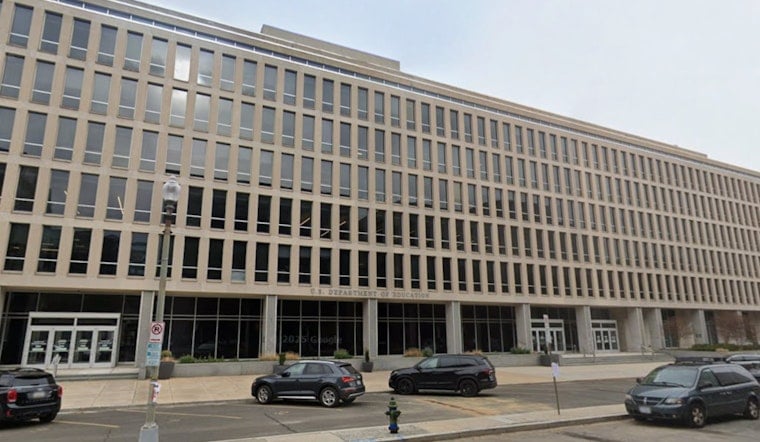
The U.S. Department of Education has stripped the disparate-impact standard out of its Title VI regulations, shutting down a long-used way for the federal government to scrutinize school policies that disproportionately harm certain racial groups. Under the new approach, facially neutral rules, such as discipline codes or placement procedures, will be treated as unlawful only when officials can prove intentional discrimination. Civil-rights groups and education advocates responded sharply to the move on Thursday.
In a press release, the department said it was rescinding several disparate-impact provisions from the rules that implement Title VI of the Civil Rights Act, citing Executive Order 14281 as the legal hook. The U.S. Department of Education said the changes "will help ensure fair enforcement of Title VI, as intended by Congress." The Federal Register records that the department published a final rule with an effective date of May 22, 2026. Federal Register
What It Means In The Classroom
Disparate-impact theory has long allowed regulators and advocates to point to unequal outcomes, such as higher rates of suspensions, expulsions or special-education placements for particular racial groups, and press districts to fix policies without having to prove racist intent. As reported by The Associated Press, federal data and reporting show Black students are more likely than white peers to receive suspensions, expulsions or transfers to alternative schools. Without the disparate-impact tool, advocates warn it will be significantly harder to force systemic changes at the district level.
Legal Implications
The department and the White House say the move brings Title VI into line with Supreme Court precedent and with the administration's April 2025 executive order directing federal agencies to end disparate-impact liability. The White House and the Department of Justice have also signaled a broader rollback: in June 2026, the Justice Department issued an opinion questioning longstanding disparate-impact guidelines. Justice Department Legal experts say shifting enforcement to require proof of intentional discrimination raises the bar for families and civil-rights attorneys trying to address pattern-level harms.
Reactions
Assistant Secretary for Civil Rights Kimberly Richey argued that the changes will "empower schools" and prevent the federal government from "weaponizing" antidiscrimination laws. U.S. Department of Education Civil-rights groups quickly pushed back. The Lawyers' Committee's Educational Opportunities Project warned the rollback removes a "critical guardrail" for students, and the Legal Defense Fund called the move a retreat from civil-rights enforcement. Lawyers' Committee Legal Defense Fund and Asian Americans Advancing Justice issued joint statements condemning the change.
What's Next
Advocates say courtroom battles are likely. Similar regulatory rollbacks have already sparked lawsuits this year, including a May 2026 challenge to the Consumer Financial Protection Bureau's rule that removed disparate-impact liability in lending. Mayer Brown noted that plaintiffs have already asked courts to block that rewrite. Civil-rights groups, state attorneys general and school districts are widely expected to test the new standard in courts and in state legislatures in the months ahead.




