

























































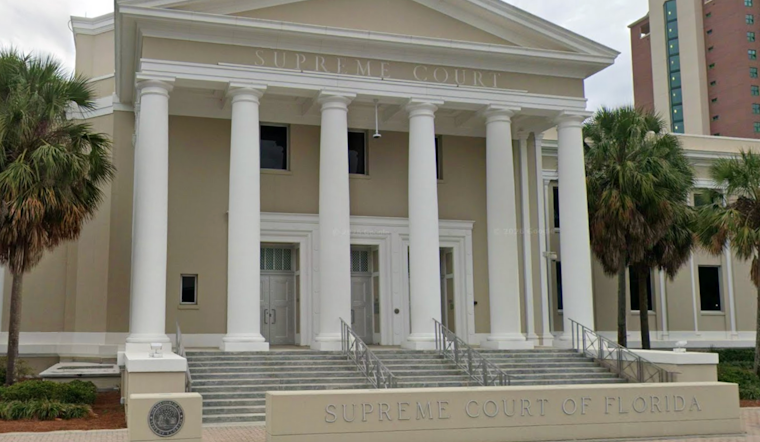
The Florida Supreme Court on Thursday declined to disturb the death sentences of Jermaine Foster, shutting down his latest attempt at a new trial and keeping in place two capital punishments that have stood for roughly three decades. The ruling closes out a postconviction fight focused on whether a co-defendant’s testimony was improperly coerced and whether new evidence might have altered the outcome.
In a per curiam opinion issued July 16, 2026, the court concluded that the circuit judge’s findings were supported by competent and substantial evidence, according to Tampa Free Press. Chief Justice Couriel and Justices Labarga, Muñiz, Grosshans, Francis, and Sasso joined the decision, while Justice Tanenbaum did not take part.
Foster was convicted in 1994 of two counts of first-degree murder, one count of attempted first-degree murder, and four counts of kidnapping for his part in a 1992 robbery and shooting spree that left Anthony Clifton and Anthony Faiella dead and wounded Michael Rentas, according to the trial and appellate record summarized in later opinions and outlined at Justia.
In his most recent postconviction motion, Foster claimed prosecutors knowingly relied on false testimony from co-defendant Leondra Henderson and called 14 witnesses at a late 2023 evidentiary hearing in an effort to back that up. Henderson ultimately told the court he had fabricated his story about being coerced and affirmed his original trial testimony. The postconviction judge and now the state’s high court found that the new testimony did not undercut the verdict, according to Tampa Free Press.
Polygraph Evidence and Legal Limits
The justices also turned aside arguments tied to polygraph material, sticking with long-standing Florida precedent that generally keeps lie-detector results out of the courtroom unless both sides agree in advance. For the court’s explanation of why polygraph evidence is viewed as unreliable and inadmissible, see the decision in Delap v. State as published by Justia.
Why the Court Deferred to the Trial Judge
The ruling highlights the Supreme Court’s usual practice of deferring to a trial judge’s credibility findings after an evidentiary hearing. Foster’s case has generated a long trail of collateral motions and appellate decisions, and the court’s earlier opinion maps out that procedural history and how the justices have handled prior issues. Readers can review that background in the opinion available from the Florida Supreme Court.
What Comes Next
Foster remains under sentence of death, although his lawyers still have the option of seeking federal habeas review. That path is narrow. Federal courts are tightly constrained by statute and precedent, and the Antiterrorism and Effective Death Penalty Act sharply limits second or successive collateral attacks except under specific statutory conditions. For an overview of those restrictions, see the description of AEDPA from Cornell LII.





