

























































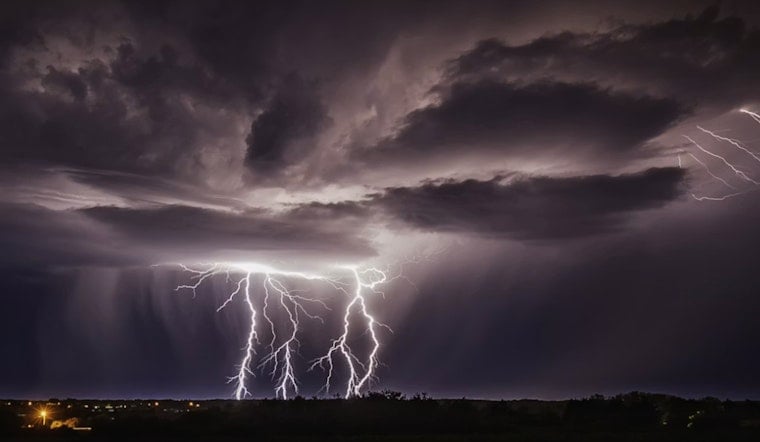
Skies over Fort Bragg turned nasty in a hurry Monday as the National Weather Service fired off a midday alert for strong thunderstorms rolling through Harnett and Cumberland counties, sliding northeast at roughly 20 mph. Forecasters warned of gusts up to about 40 mph and frequent lightning with enough punch to bring down tree limbs and send unsecured backyard gear skittering across Fayetteville and surrounding communities.
According to National Weather Service Raleigh, radar showed the storm cell over the Fort Bragg area moving northeast around 20 mph and producing gusty winds that "could knock down tree limbs and blow around unsecured objects." The office urged anyone caught outside to head into a building or vehicle and stay put until the worst of the weather moves on.
Where The Storm Could Hit
The alert singled out Fayetteville, Fort Bragg, Pope Army Air Field, Spring Lake, Eastover, Wade, Linden, Anderson Creek and Bonnie Doone as communities in the path, with possible impacts to Interstate 95 between mile markers 61 and 58, according to The Charlotte Observer. Rapid-fire radar updates and brief warnings kept popping up through the afternoon, prompting short-term cautions for drivers and outdoor workers.
What To Do Now
As reported by The News & Observer, local officials echoed the federal guidance: get indoors, stay there until storms pass, do not try to drive through flooded roadways and secure loose outdoor items that could turn into airborne projectiles in strong gusts. Motorists on I-95 and other busy routes were told to be ready for sudden downpours and bursts of wind that can slash visibility and make vehicles tougher to handle.
Lightning Risk In Context
The National Weather Service notes that thunderstorms produce an estimated 20 to 25 million cloud-to-ground lightning flashes across the United States each year and that lightning still kills roughly two dozen people annually, underscoring the real danger of being outside during a storm, according to the National Weather Service. Residents are urged to wait at least 30 minutes after the last rumble of thunder before heading back outdoors.





