

























































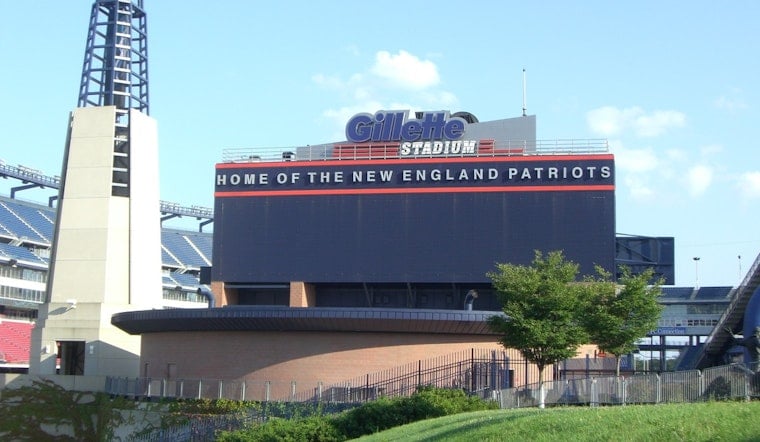
Foxborough and the Kraft Group are back in court, this time slugging it out over nearly $1 million tied to Gillette Stadium’s 2026 entertainment license. Town officials insist the bill simply covers rising public-safety and municipal-service costs. The stadium’s owners say the town is using the annual license as a cash grab. Either way, the long-running friction over who pays to keep massive crowds safe is now officially a legal fight.
What Kraft Alleges
Kraft Sports & Entertainment and related Patriots entities filed a complaint in Norfolk Superior Court in mid-June, arguing the Select Board used the license renewal to tack on roughly $953,640 in yearly charges beyond the statutory $100 renewal fee. The suit claims the town treated the standard renewal as a pretext to create new administrative assessments, pointing to wastewater and parking charges as examples. Those allegations appear in the plaintiffs’ filing, according to Boston.com.
Town Says Fees Pay For Safety
The Town of Foxborough counters that the 2026 entertainment license includes provisions requiring Kraft Sports to reimburse the community for “vital public safety and other municipal services” tied directly to stadium events. In a June 16 press release, town officials said those conditions were drafted after routine discussions with Kraft representatives and are designed to protect the health and safety of fans, stadium workers and nearby residents. The town characterizes the disputed dollars as reimbursement for escalating security and municipal outlays, not as a discretionary tax, according to the Town of Foxborough.
Foxborough’s Court Filing
Foxborough formally answered the complaint with a court filing that defends the nearly $1 million bill and asks a judge to block the plaintiffs from breaching the stadium lease and to award related costs, according to the Boston Herald. The town’s response frames the charge as a legitimate billing for safety expenses and accuses the plaintiffs of leaving out key context. As the filing puts it, “not only do the plaintiffs willfully conflate applicable statutes and legal precepts but they also purposely omit from the factual record,” language Foxborough cites to argue the complaint misstates local realities.
How We Got Here
The case follows a tense showdown in March over roughly $7.8 million in security costs for FIFA World Cup matches at Gillette Stadium. At that time, town leaders said they would not issue the event license unless they were assured Foxborough taxpayers would not be stuck with the bill. That standoff ended only after the Kraft Group agreed to cover the World Cup security costs, a deal that cleared the way for the tournament and helped set up the current licensing dispute, as reported by Axios.
Legal Stakes And Next Steps
The plaintiffs argue that Massachusetts law caps a municipal entertainment license renewal fee at $100 and have asked the court to strike portions of the 2026 license that require additional payments. Foxborough maintains that the contested terms simply reimburse concrete municipal services and has asked the court to uphold the license conditions and award costs. The case is listed on Norfolk Superior Court dockets as a certiorari-style administrative matter, with the statutory and procedural issues outlined in reporting and court listings from WBUR and Trellis.
What To Watch
In the short term, the action will revolve around court motions, scheduling orders and any behind-the-scenes settlement talks. Either side could push for a quick ruling or gear up for a long haul that winds through the appeals courts. The outcome will help define how far cities and towns can go in using event licenses to recoup public-safety costs from privately run venues and could spark legislative interest if judges interpret the fee limits narrowly. For now, both Foxborough officials and stadium representatives say operational conversations are continuing even as the legal fight plays out, according to NBC Boston.





