

























































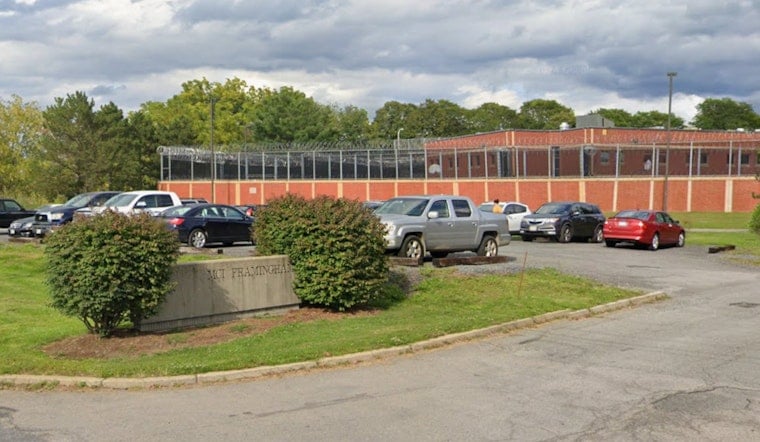
A red front door and a small porch now greet pre-release residents on the MCI-Framingham campus, a small but symbolic shift from razor wire to something closer to a neighborhood street. The new two-story home will house up to 12 women in a minimum-security setting, with the first cohort of five expected to move in on Aug. 3. State officials say the residence is designed to give people exiting prison a less institutional environment where they can practice daily life skills and rebuild family ties before they walk out for good.
Homey, Not Institutional
Inside, the place is staged more like a family home than a prison unit, with a communal dining table, a stocked kitchen, and bedrooms made up with matching bedding, according to The Boston Globe. It is still a prison setting, though: cameras monitor the common areas, and an officer’s room sits upstairs. Prison leaders say that balance is intentional, meant to normalize daily routines while keeping enough security in place to satisfy state rules.
Official Opening And Programming
The Reintegration House officially opened on July 14, with the state billing it as a pre-release residence that offers structured life-skills training, employment readiness work, and family-reunification programming, according to the Massachusetts Department of Correction. DOC officials say correctional program officers, clinicians, and the agency’s Reentry Services Unit will support residents as part of the department’s Align initiative. The house is framed as one piece of a broader push that officials argue will cut recidivism through earlier, more community-focused preparation for release.
Who Will Live There
Officials plan to prioritize women who qualify for minimum-security placement and are nearing the end of their sentences, with lengths of stay tailored to individual needs and behavior, as reported by WCVB. Although the building can hold up to 12 residents, the program will start with a smaller group of four or five women so staff can test routines and finalize handbooks before scaling up. There are about 240 women incarcerated at MCI-Framingham, which makes the new house a relatively small pilot and a live test of a different kind of state correctional strategy.
Where It Fits In The Bigger Fight
The Reintegration House is arriving as the Healey administration pushes a larger $360 million capital plan to modernize the aging MCI-Framingham campus, a proposal that has drawn criticism from advocacy groups that argue the money should go to services rather than new or upgraded facilities, according to The Boston Globe. Critics say renovating the prison will not fix deeper problems such as staff misconduct and lack of programming. Supporters counter that improved campus-style facilities, paired with pre-release housing like this, are practical tools in the push to reduce repeat incarceration.
What Officials Say
State leaders are pitching the house as both a reentry tool and a public-safety play, calling it “an important opportunity to strengthen pathways to successful reentry,” according to a DOC statement. Massachusetts Department of Correction materials quote Secretary Gina Kwon and Commissioner Shawn Jenkins stressing “normalization” and hands-on reentry support as key goals. DOC officials also point to an adjacent “Learning Annex,” which they say will give residents and families a dedicated space for visits, programming, and reunification work.
Next Steps
DOC leaders say they will judge the Reintegration House by outcomes like residents’ employment, housing stability, and reduced returns to custody, though many of the finer details will be worked out once people are actually living there. Community groups and advocates plan to watch closely to see whether this small, home-style setting delivers better reentry results than conventional prison units. The first residents are expected to arrive in early August, marking the start of a closely watched experiment in how Massachusetts prepares women to return home.





